|
|
|
|
|
|
|
|
FY 2026 Notice of Funds Availability (NOFA)
The Austin Housing Finance Corporation has announced FY 2026 funding availability for affordable housing development, targeting rentals for households below 50% Median Family Income and ownership below 80% MFI.
IMPORTANT DATES
Ownership developments and rental developments without tax credits are also eligible to submit in both rounds. For detailed updates on guidelines and application link, visit the HDA webpage (Housing Development Assistance Funding | AustinTexas.gov). Contact the HDA Team at HousingDevelopmentAssistance@austintexas.gov for specific questions.
New HDA Guidelines
New Rental Housing Development Assistance (RHDA) and Ownership Housing Development Assistance (OHDA) Program Guidelines
A comprehensive assessment of development funding was led by Austin-based consulting firm, Guidehouse, which included feedback from the local market and community organizations. Conducted at the direction of Austin City Council Resolution 20220901-087, the City is implementing targeted changes to RHDA and OHDA. These programs provide critical gap financing that complements Low-Income Housing Tax Credits (LIHTCs), helping to make affordable housing projects financially viable.
Updated Program Guidelines for both RHDA and OHDA programs include significant changes to the application process and program structure. The enhancements will streamline the housing development assistance financing process, improve transparency for developers, and align application timelines with current LIHTC cycles to increase the impact of housing bond dollars investments throughout Austin.
Key Changes:
Eligibility Determination
The project review process now includes an eligibility checklist. Applications must pass minimum requirements across five key areas before moving to full review: application submission, project financing, site and land use, real estate, and miscellaneous criteria. This upfront check catches issues early in the process.
New Application Quantitative Scoring
The old HDA scoring system has been replaced with new quantitative rubrics. Eligible projects are evaluated across three categories: community benefit, financial score, and developer/property manager experience. Proposals must meet minimum threshold scores to advance.
New Submission Portal
A redesigned online application portal is now available with clearer instructions and additional questions for better project understanding. The improved interface guides applicants through each step of the process.
Enhanced Development Underwriting
The RHDA underwriting process has been upgraded. This includes a new RHDA Application Excel Workbook that standardizes project evaluation and improves HDA staff underwriting capacity.
Increased Funding Transparency
Enhanced funding visibility is now available on the HDA webpage. A table displays fiscal year funding availability, and an interactive map highlights geographically restricted funding areas.
Summary of Terms
A new Summary of Terms spreadsheet outlines the range of loan terms available under RHDA and OHDA Programs. While many projects follow these standard terms, all applications are evaluated individually based on cash flows, capital stack, debt structure, risks, and overall project merits.
|
|
|
|
|
|
|
Private Activity Bond (PAB) Deadlines for AHFC/AHPFC 2026 Lottery Inducement
Applicants for 4% Low-Income Housing Tax Credits within the City of Austin may request a Private Activity Bond (PAB) inducement for the 2026 bond lottery from Austin Housing Finance Corporation (AHFC) or Austin Housing Public Facility Corporation (AHPFC) by submitting this application by Wednesday, August 13, 2025. For more information and resources, please see our PAB webpage.
Applicants who intend to request a partnership with AHFC as part of the proposed development and/or applicants who anticipate a funding gap and wish to explore financing through the Rental Housing Development Assistance (RHDA) program must submit those requests by Friday, July 25, 2025. To request a partnership with AHFC, applicants must complete a partnership interest form. Updated application materials for a RHDA request will be published in mid-July and available on the RHDA Funding webpage. Applicants requesting an AHFC partnership will be required to submit the updated RHDA application materials along with their partnership request. Applicants who do not meet these deadlines may be ineligible for consideration for PAB inducement.
All PAB inducement applicants should be aware of the following: All applicants should thoroughly review the AHFC/AHPFC PAB Program Guidelines for local issuer requirements and fees. Staff will issue an invoice for a required $5,000 application fee upon receipt of the application.
|
|
|
|
|
|
|
Austin EDI Program
Capital Impact Partners and HousingWorks Austin are excited to announce the launch of the next cohort for Austin EDI, funded by the Housing Department at the City of Austin. Over the next nine months, seventeen Austin-area developers will participate in formal real estate development training, engage in workshops with local development experts and city leaders, and join discussions focused on the challenges and opportunities for community-rooted developers in metropolitan regions. For more information, reach out to Dawn.Perkins@austintexas.gov.
|
|
|
|
|
|
|
Colony Park Displacement Mitigation Strategy RPF
A request for proposals (RFP) for the development of a Displacement Mitigation Strategy and Implementation Plan for the Colony Park Sustainable Community is now open through July 15. The best proposal will provide a scope of work for the development of a Displacement Mitigation Strategy and Implementation Plan for Colony Park that includes strategies for Tenant Stabilization; Homeowner Stabilization and Expansion; Neighborhood Stabilization; and Economic Mobility. Interested organizations can find more details at Austin Finance Online Colony Park RFP.
|
|
|
|
|
|
|
Disaster-Related Exemptions Available to Help Property Owners
Central Texas property owners who suffered damage to buildings, mobile homes, or business personal property due to the recent storms and floods may be eligible for temporary relief on their 2025 property taxes. To be eligible, a property must have suffered damage that totals a minimum of 15% of the property’s improvement value. This includes structures on the property, such as homes and buildings. Damage to landscaping or trees on a property cannot be included in determining eligibility for the exemption. The temporary exemption lasts until the property is reappraised. Property owners in Bandera, Bexar, Burnet, Caldwell, Coke, Comal, Concho, Guadalupe, Gillespie, Kendall, Kerr, Kimble, Llano, Mason, McCulloch, Menard, Reeves, San Saba, Travis, Tom Green, and Williamson counties may be eligible and should contact their local appraisal district for more information.
In Travis County, the deadline to apply for a temporary exemption related to the floods is Monday, October 20, 2025. Travis County property owners must complete an application and submit it to the Travis Central Appraisal District by mail, in person (850 East Anderson Lane), or online. More information, including a calculator to help property owners estimate if they qualify for this exemption, can be found on the Travis CAD website at traviscad.org/disasters.
|
|
|
|
|
|
|
Live Make Apartments
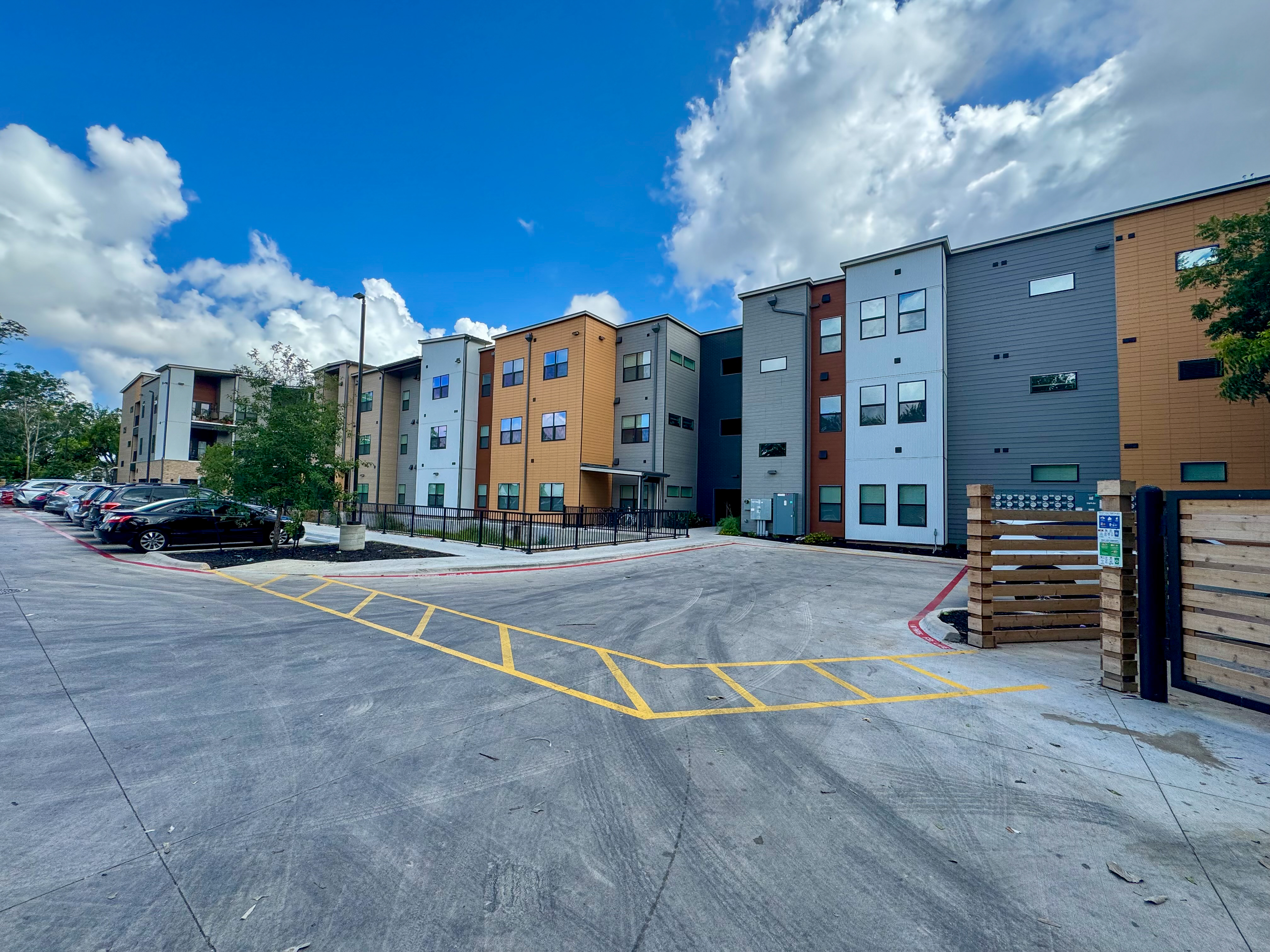
We celebrated the opening of Live Make Apartments, a 66-unit affordable multi-family rental housing community for vulnerable populations, including artists with and without disabilities, and individuals transitioning out of homelessness. Located in District 3 at 1127 Tillery Street, the 2.65-acre property also includes 8,000 square feet of community and creative spaces, including a painting studio, ceramic studio, community classroom, public art gallery, and community kitchen.
Live Make's total development cost was about $19,750,000. The site received $6,500,000 from the AHFC, comprising $6,203,000 in 2018 General Obligation (GO) Bonds and $297,000 from the Housing Trust Fund. The development also secured an award of 4% Low-Income Housing Tax Credits (LIHTC) from the Texas Department of Housing and Community Affairs (TDHCA), which generated over $9 million in equity from its sale to Red Stone Equity Partners.
|
|
|
|
|
|
|
Industry SOMA
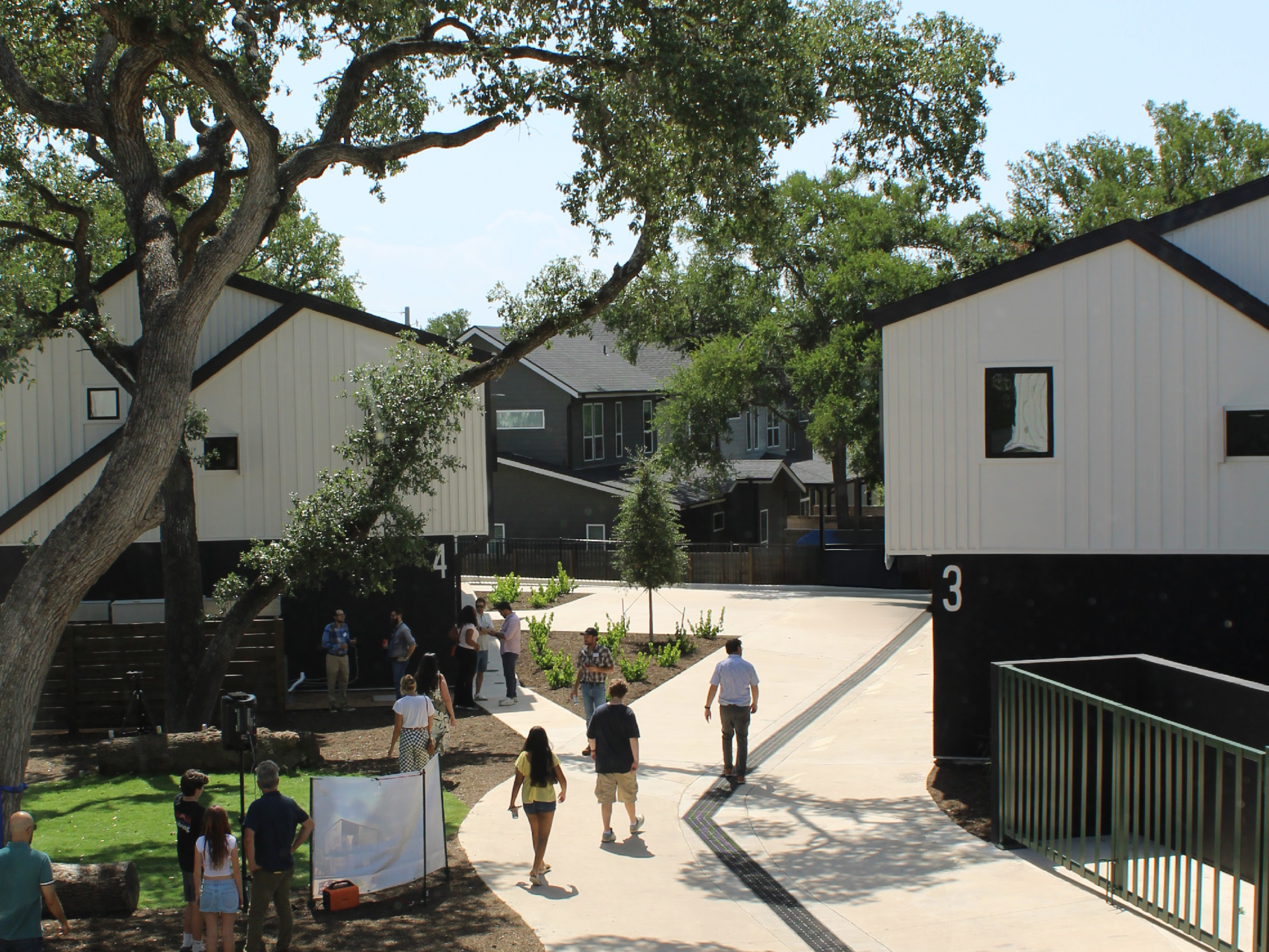
We are happy to announce the grand opening of Industry SOMA, a brand-new affordable townhome community, in South Austin located at 1905 Keilbar Lane, near William Cannon and South Menchaca.
Industry SOMA offers 23 aesthetically modern, move-in-ready townhomes priced between $240,000 and $320,000. The community is built specifically for income-qualifying families earning at or below 80% of the Austin MFI (median family income) — with a focus on creating long-term, sustainable homeownership and retaining families with generational ties to the neighborhood.
Industry ATX received just under $3 million in funding from 2022 General Obligation (GO) Bonds through the Ownership Housing Development Assistance (OHDA) Program. This funding enabled Industry ATX to offset construction costs. The benefits of the Affordability Unlocked program waives or modifies some development restrictions in exchange for providing low- and moderate-income housing. In exchange for setting aside at least half of a development’s units as affordable, developers can take advantage of bonuses such as height and density increases, parking and compatibility waivers and reductions in minimum lot sizes. The affordable units must be sold to households earning at or below 80% Median Family Income (MFI) and the units will remain affordable for 99 years.
|
|
|
|
|
|
|
Mira
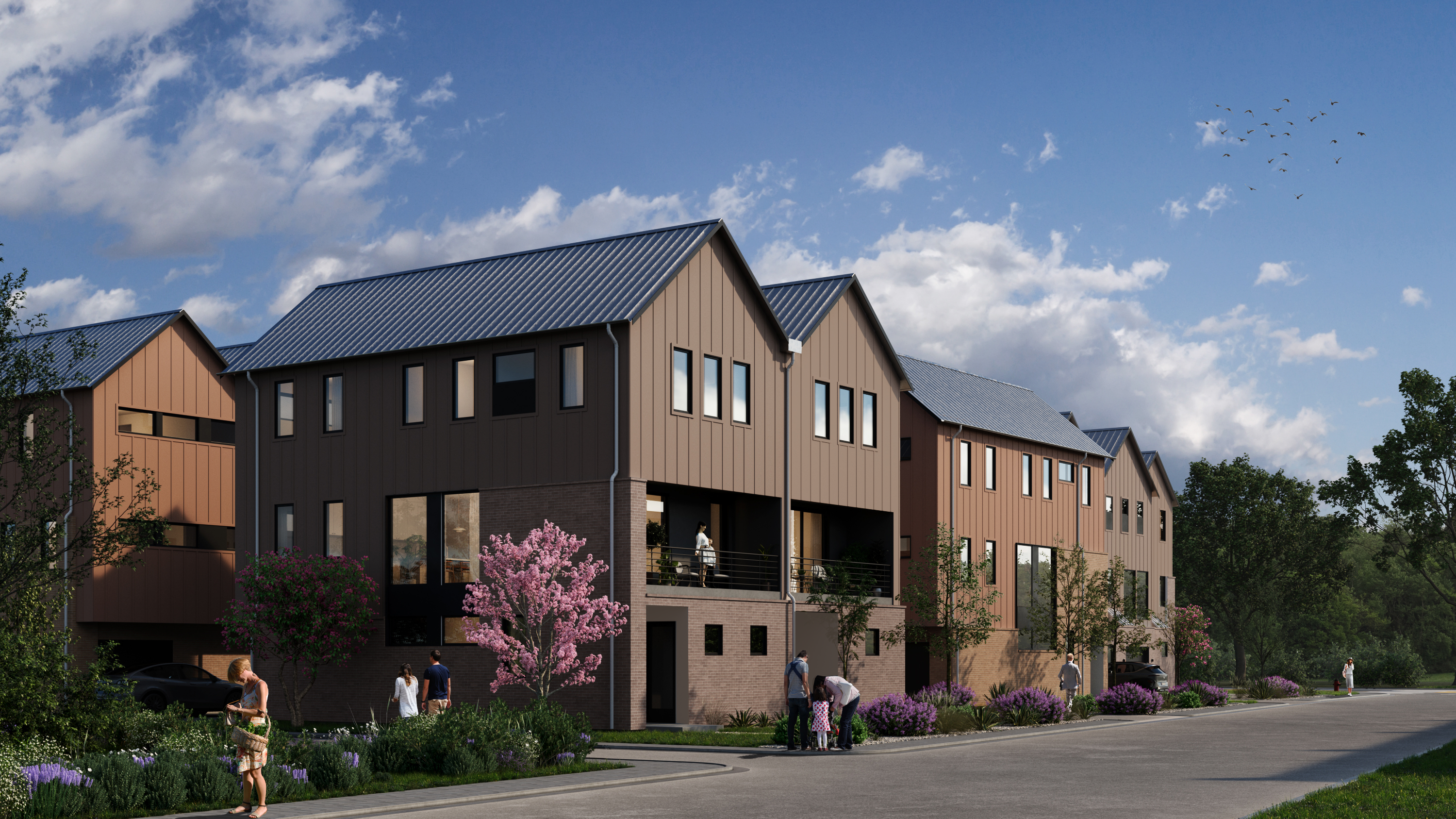
We celebrated the groundbreaking of Mira, a new residential townhome mixed-income, missing middle community. Construction began in April 2025 and is anticipated to be completed by Winter 2025. Mira, located in the Govalle neighborhood at 732 Springdale Road in District 3, will include 12 townhomes, two of which will be four-bedroom homes reserved for households earning at or below 65% Median Family Income (MFI). The AHFC executed a loan agreement of $240,000 in 2018 General Obligation (GO) Bonds to fund the construction of those two affordable homes. HomeBase will manage the initial sale of the two affordable homes. The site will also utilize the City’s S.M.A.R.T. Housing Program.
|
|
|
|
|
|
|
Johnny Limon Village
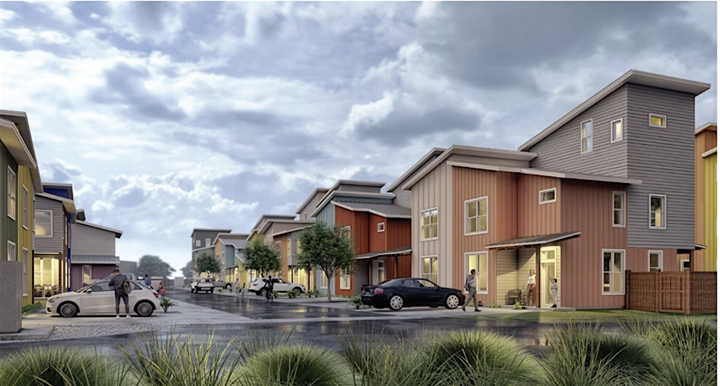
We celebrated the groundbreaking of Johnny Limon Village, a new 27-unit Community Land Trust homeownership community in East Austin. Johnny Limon Village, located at 800 Gardner Road in District 3, will consist of 20 homes available at 80% Median Family Income (MFI) and 7 homes at 60% MFI. The development will be completed in two phases, with half of the homes available in Winter 2026 and the other half available in Spring 2027. The homes range in size from 1,200 to 1,650 square feet. Community Land Trusts (CLT) create permanently affordable housing by owning the land and selling the homes on it at below-market rates.
|
|
|
|
|
|
|
Iris Gardens
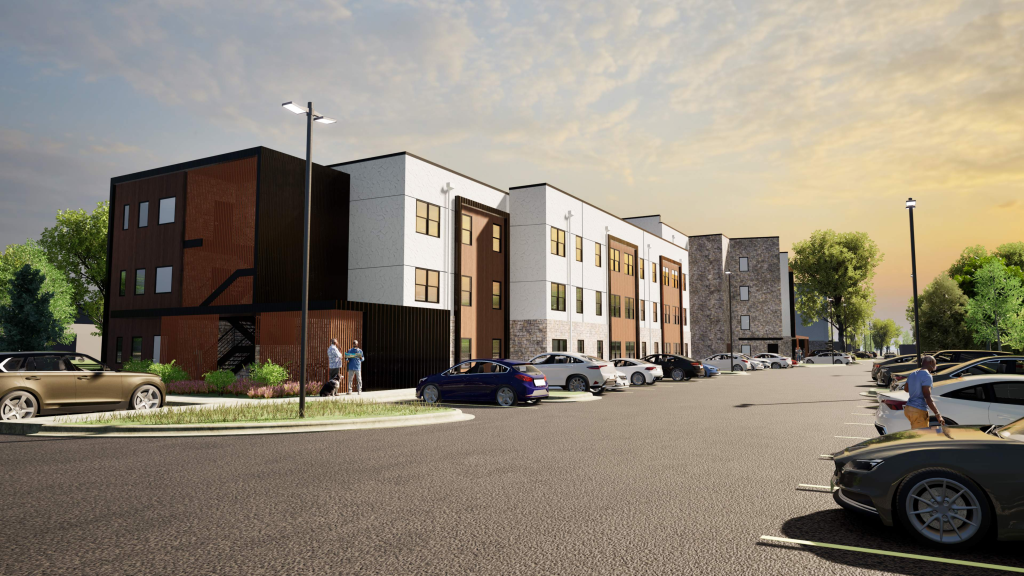
We are happy to announce the groundbreaking of Iris Gardens, a new deeply affordable senior living and LGBTQIA2+-affirming community. Developed through a partnership between local nonprofit Family Eldercare and developer Vecino Group, this 150-unit building will provide opportunities for community members who often face barriers to securing affordable housing. Located at 1013 Montopolis Drive, in East Austin’s District 3, Iris Gardens will offer a mix of one- and two-bedroom apartments. Residents will have access to supportive services, including programs for those exiting homelessness, as well as employment assistance, financial literacy classes, health and well-being classes, and life skills training. Members of the LGBTQIA2+ community will benefit from Rainbow Connections, a Family Eldercare program that provides focused on promoting the well-being and quality of life.
Estimated constructions costs for the Iris Gardens development are about $50 million. Key funding sources include an $8 million loan from the Austin Housing Finance Corporation (AHFC) through the Rental Housing Development Assistance (RHDA) program, financed by General Obligation (GO) Bonds and Downtown Density Bonus Program – Permanent Supportive Housing funds and approximately $4.5 million of American Rescue Plan Act funding from Travis County. Additional funding and support came from CITI Bank and Redstone Equity.
Construction of Iris Gardens is slated for completion in late Spring 2027.
|
|
|
|
|
|
|
City of Austin Development Services Department | Second Series of Land Development Academy Classes to Begin July 22
The second speaker series of our popular Land Development Academy series is set to begin July 22. This is a great opportunity to start building your knowledge or continue your deep dive into the regulations and processes that guide site plan review in Austin. As with the first series, City of Austin experts who do this work will present the series of virtual and in-person classes.
The second series includes:
Visit the Land Development Academy website to learn more and register for these new classes. If you have questions or need help, please email dsdcommunications@austintexas.gov.
|
|
|
|
|
|
|
City of Austin Development Services Department | Updated Technical Codes Now in Effect in Austin
Recently amended technical code requirements are now in effect for new and existing buildings in Austin. Beginning July 10, new applications for building plan review and permits must follow the amended codes.
The Austin City Council voted in April to revise 10 sets of technical standards that regulate building design, construction, and maintenance throughout the city. Besides addressing internationally accepted best practices for building safety, the codes also include local amendments addressing specific community priorities. Changes include new residential air conditioning requirements, single stairway provisions, expansion of the Wildland-Urban Interface area, new guidelines for energy efficiency and electric vehicle readiness, and fire safety additions for animal care facilities and lithium battery storage.
A recording and presentation materials from a recent stakeholder meeting explaining the changes are now available on the Building Technical Codes webpage. Updates to affected code interpretations will be posted as they become available. If you have specific questions about the amended codes, contact buildingofficial@austintexas.gov.
|
|
|
|
|
|
|
Share this Newsletter
You're receiving this communication because you have applied for funding before or worked the City of Austin Housing Department in the past.
|
|
|
|
|
|
|
|
