 Climate Priorities Survey
Climate Priorities Survey
The Atlanta Regional Commission is developing the first comprehensive climate action plan for the 29-county Atlanta Metropolitan Statistical Area. The Metro Atlanta Climate Action Plan (MACAP) will serve as a roadmap to create a sustainable and resilient future for all, while also highlighting strategic initiatives to transition to near net zero greenhouse gas (GHG) emissions by 2050.
We want to identify strategies and actions that support the long-term health and resilience of our community and we need your help. Your feedback and input through this survey will be an important part of our planning process!
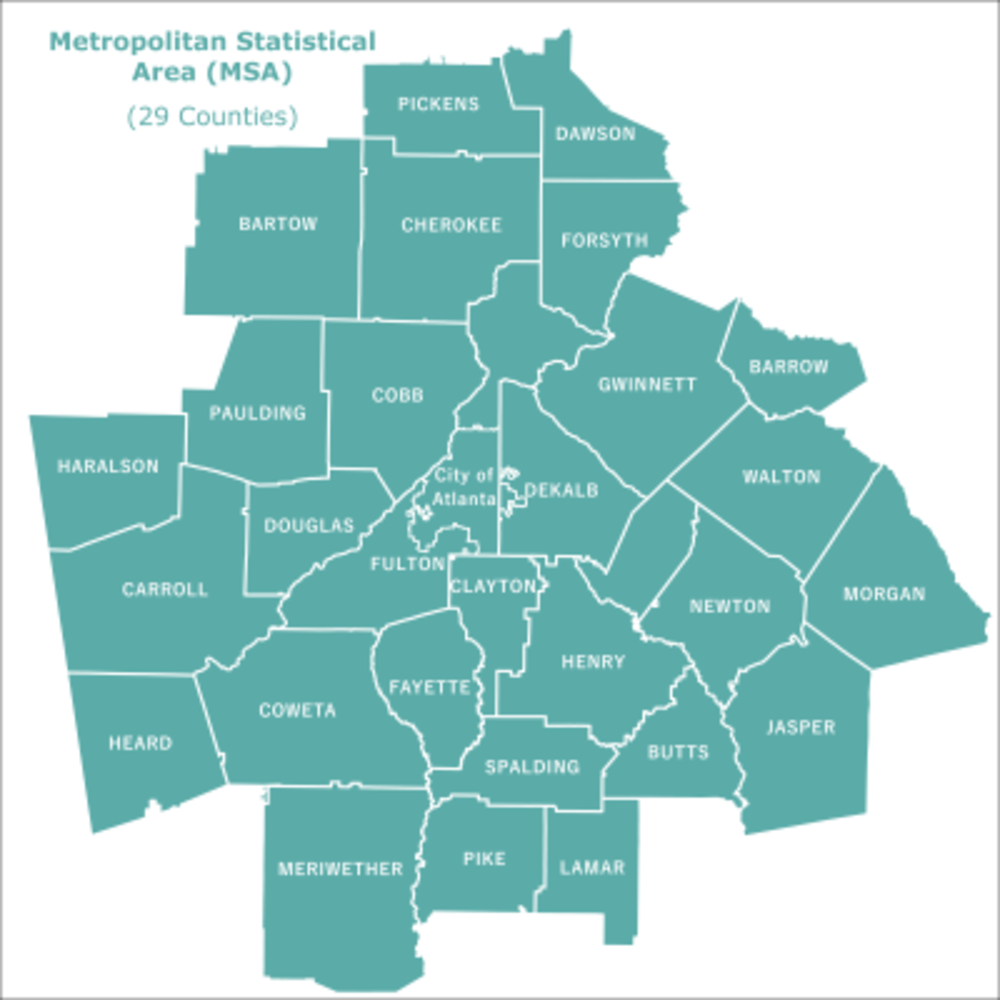
Are you a resident of or do you work within the 29-county Atlanta Metropolitan Statistical Area? (See map with counties above.)
What MSA county or counties are you located in or do you serve?
How did you learn about the Metro Atlanta Climate Action Plan?
CLIMATE PRIORITIES
As part of our plan, we will be developing strategies and actions to tackle greenhouse gas emissions within 5 focus areas:
TRANSPORTATION: Increasing options for more people to walk, bike, take public transportation, or use electric vehicles will help reduce transportation-related GHG emissions so our region has cleaner air to breathe.
BUILDINGS: More efficient heating & cooling will have multiple benefits including more comfortable homes & workplaces, improved community health, greater resilience in the face of extreme weather & other emergencies, & reduced energy costs for residents & building owners.
ENERGY: To decrease harmful emissions, we need to transition to meet the energy needs of our homes, businesses, & vehicles with renewable sources of energy. Renewable energy includes energy from sunlight, biogas, & geothermal heat.
WASTE: Reducing the amount of waste created by our communities, composting, and recycling can help reduce GHG emissions and the need to extract additional natural resources.
NATURAL LANDS: Restoring, protecting, and expanding natural systems provides a natural defense against climate change and can lessen the impact of flooding and urban heat as well as absorb emissions.
 We want to hear from you about your Climate Priorities to help us shape goals, strategies, and actions for the Metro Atlanta Climate Action Plan. For each category below, let us know how important each topic is to you. Feel free to rank and vote on as many or as few of the topics as you would like.
Each of these topics ends with an option to post additional thoughts publicly using your name or chosen nickname. If you wish to comment anonymously, please toggle off the "post publicly" button at the bottom of the text box for each question. In doing so, your responses will only be routed to our project team. Thank you for providing your valuable feedback!
TRANSPORTATION: In thinking about how you get around the community, which of the items below are most important to you? (Click a bar and drag it to the top of the list in order of priority to you.)
BUILDINGS: In thinking about the sustainability of your home, business, or buildings in your community, which of the items below are most important to you? (Click a bar and drag it to the top of the list in order of priority to you.)
ENERGY: In thinking about the supply of energy to our homes, businesses, and vehicles across the community, which of these are most important to you?
(Click a bar and drag it to the top of the list in order of priority to you.)
WASTE: In thinking about dealing with waste in your home, business, and/or neighborhood, which of these are most important to you? (Click a bar and drag it to the top of the list in order of priority to you.)
NATURAL LANDS: In thinking about the natural outdoor spaces in our community, which of these are most important to you? (Click a bar and drag it to the top of the list in order of priority to you.)
In thinking about challenges or concerns related to the climate action topics you've just explored and ranked, what may be the most important potential impacts to consider? (Select up to 4)
STRATEGIES AND ACTIONS
Within each of the categories above, we will be developing strategies to identify specific solutions to the barriers and concerns listed above. Examples of strategies and actions might include:
- Planting more trees across the community to absorb emissions and reduce the impacts of extreme heat
- Deploying more electric vehicle charging stations to serve areas that do not already have them
- Providing rebates for the purchase of e-bikes to give community members better access to low-cost, low-carbon transportation
Do you have any recommendations for strategies or actions? (Type into the box above the orange comment button below and then hit "Comment" to post your idea.)
GETTING TO KNOW YOU
If you have a little more time, please let us know more about yourself and your views on climate change by answering the following questions.