
Building a Clear, Credible Record That Supports Decisions
Well-designed community engagement doesn’t just build trust in the moment, it creates a clear record that stands behind decisions long after they’re made.
For state and local agencies, engagement carries real responsibility. Beyond listening and learning, teams must be able to demonstrate that outreach was inclusive, participation opportunities were equitable, and community input was handled transparently and thoughtfully.
A strong engagement record does more than check a compliance box. It protects decisions, supports accountability, and gives agencies confidence when questions arise—whether from leadership, the public, or formal oversight.
This post explores how documenting engagement works best when it’s treated as a core part of the engagement strategy itself, not an after-the-fact task.
Documentation as Part of the Process, Not a Cleanup Step
Too often, documentation is treated as something to assemble at the end of a project—when reports are due, records are requested, or scrutiny increases. That approach creates unnecessary stress and leaves gaps that are difficult to reconstruct later.
When documentation is embedded throughout the engagement process, it becomes a natural outcome of doing the work well. A clear engagement record shows not only what decisions were made, but how the public was involved along the way—and how their input was considered.
A strong record helps agencies clearly answer practical questions like:
- How and when was the public notified?
- Who had opportunities to participate?
- What input was received across different channels?
- How did that input inform next steps or decisions?
These answers matter not just for transparency, but for credibility.
Capturing Engagement Across Channels Without Fragmentation
Modern engagement happens everywhere—emails, surveys, meetings, mapping tools, social platforms, and community partnerships. While this expands reach, it also makes documentation harder when information lives in disconnected systems.
Fragmented records increase risk, consume staff time, and make it harder to tell a coherent story about the engagement process.
PublicInput centralizes engagement activities in a single system, capturing outreach efforts, participation metrics, meeting records, and input histories together. This unified view makes it easier to monitor and demonstrate compliance with public meeting requirements, accessibility standards, and internal policies—without extra manual work.
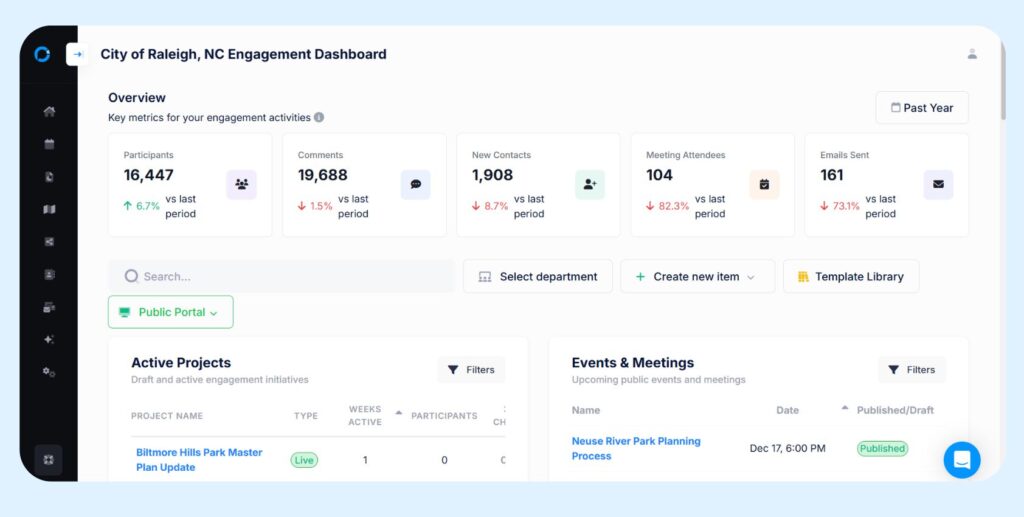
Just as importantly, it allows agencies to maintain continuity across projects, so engagement records don’t disappear when a project ends or staff roles change.
Accessibility and Transparency Strengthens Both the Record and Compliance
Many of the requirements agencies must meet (like language access, ADA accommodations and public notice) are also foundational best practices for inclusive engagement. When accessibility and transparency are built into engagement design, documentation becomes stronger by default.
PublicInput supports this alignment through multilingual engagement tools, accessible virtual meeting options, and centralized public portals that make project information easy to find. These features reduce barriers for participants while creating a clearer, more defensible record of how engagement was conducted.
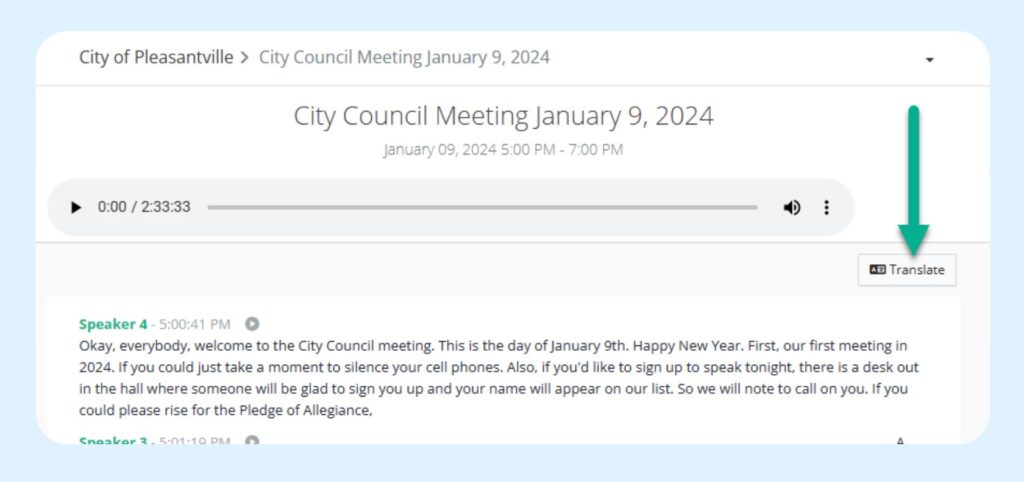
Confidence When It Matters Most
Whether responding to public records requests, audits, leadership and elected officials’ questions, or legal review, a well-organized engagement record allows agencies to respond clearly and consistently.
When documentation is treated as an integral part of engagement—not a separate obligation—it becomes a source of confidence rather than concern. It supports decisions, reinforces public trust, and ensures that the effort invested in engagement continues to add value long after a project moves forward.
If you’d like to see how a centralized engagement record can support transparency and confidence across your work, explore how PublicInput helps agencies document community engagement with clarity and consistency.