
Tracking community engagement in local government is more complex than ever. Residents reach out via email, phone, social media, public meetings, and more. Without a centralized system, it’s easy for insights to slip through the cracks.
A resident-centric CRM helps city and county managers capture, organize, and act on every interaction with residents. Here’s why it makes a difference:
Resident-Centric: Beyond Contacts
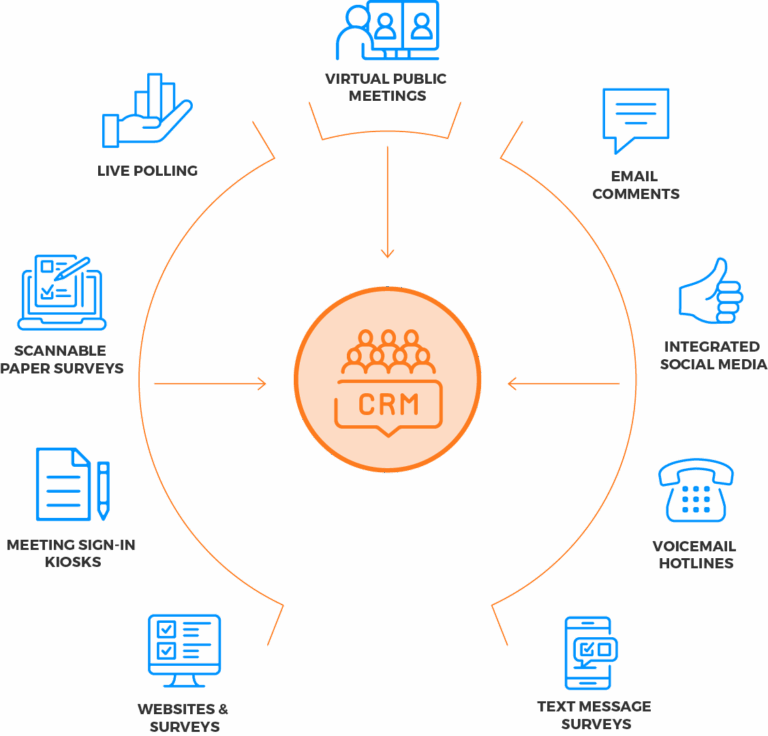
Traditional CRMs focus on basic contact info. A resident-centric CRM captures everything — comments, voicemails, emails, texts, and meeting attendance — all linked to a single record. Managers can understand not just who reached out, but how they engage with your government over time.
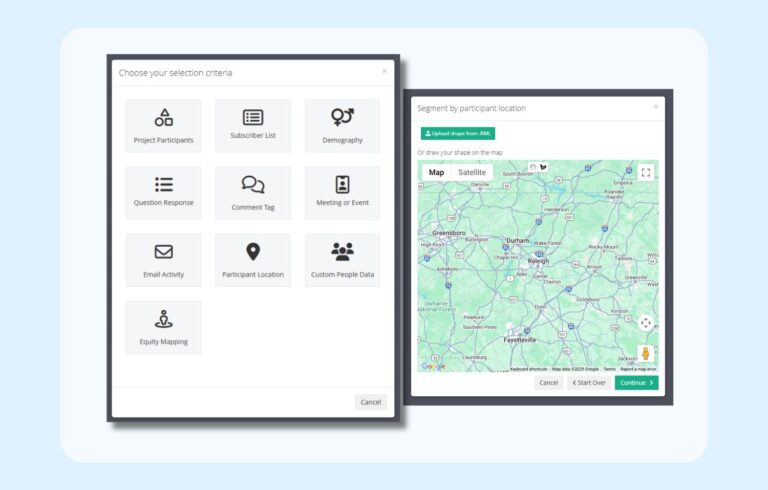
Multi-Channel and Inclusive
Residents communicate in many ways. PublicInput centralizes all these channels — surveys, emails, text messages, QR codes, social media, and in-person meetings — and lets you segment audiences by neighborhood, demographics, or participation history. This ensures outreach is more inclusive and effective.
Actionable Insights
Data is only useful if it can be acted upon. Real-time dashboards, AI-assisted comment analysis, sentiment tracking, and automated reporting turn raw engagement into practical insights. Staff can quickly spot trends, identify gaps, and make informed decisions — instead of manually piecing together multiple sources.
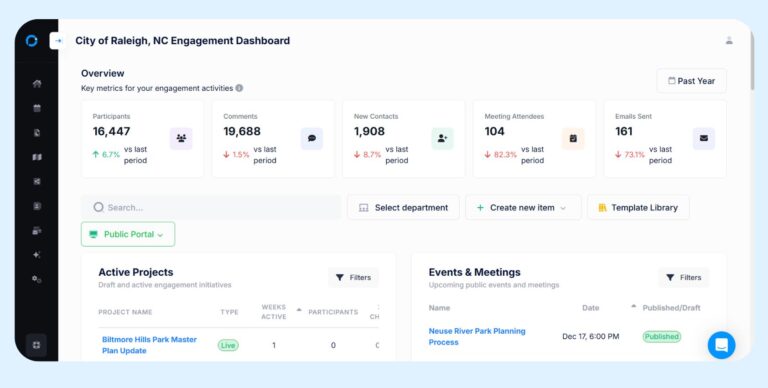
Project-Centric Organization
Every initiative has its own story. PublicInput organizes engagement by project, not just by person, so each effort — whether a capital project, budget survey, or rezoning proposal — has its own data trail. Managers can track feedback, measure participation, and generate transparent reports for every project.
Scalable Across Departments
Large cities often struggle with siloed information. Cities like Austin use PublicInput across 40+ departments, consolidating millions of interactions into a single system. This reduces duplication, improves collaboration, and gives leaders a complete view of community engagement.
Keep Institutional Knowledge in the Organization
One of the biggest benefits administrators notice: when staff changes happen, historical knowledge stays with the organization. New employees can reference past interactions, learn quickly, and continue projects without losing momentum. Outgoing staff don’t take critical knowledge with them, resulting in more efficient and effective operations.
Centralize Engagement. Improve Operations.
For administrators, a resident-centric CRM isn’t just a tool — it’s a way to centralize communication, preserve institutional knowledge, and improve day-to-day operations.
Cities like Austin, TX use PublicInput to track more than 1.1 million survey responses and grow their contact list by over 350,000 residents, giving staff a complete picture of engagement across dozens of departments.
Ready to see what that looks like in practice? Explore how PublicInput’s CRM brings every interaction into one place — or book a demo to see it in action.