Capture What Matters: Turning Community Input Into Usable Insight

Because community engagement only delivers value when input is captured, organized, and interpreted in context.
Community engagement doesn’t end when residents share their thoughts. In many ways, that’s where the real work begins.
After you’ve reached the right audiences and designed engagement that invites meaningful participation, the next step is capturing resident input. That means collecting, organizing, and preserving feedback in ways that keep its context intact and usable.
This step is where intent becomes evidence and where many engagement efforts either gain long-term value or lose critical nuance.
Capturing More Than Comments
Community input arrives in many forms: survey responses, map pins, meeting testimony, emails, social comments, and conversations facilitated by trusted partners. Each of these carries insight, but only if captured with enough context to be understood later.
This builds on the inclusive outreach principles we’ve shared previously—understanding who is participating and why (see our post on inclusive outreach). Without that foundation, input risks becoming a disconnected collection of opinions rather than a reliable source of insight.
Meaningful capture asks:
- Who shared this input?
- Where did it come from?
- What issue does it relate to?
- How does it connect to other feedback we’ve received?
Why Context Matters
Input without context is difficult to interpret and even harder to defend.
For example, a comment opposing a project may mean something very different depending on whether it came from a directly impacted resident, a frequent participant, or someone encountering the initiative for the first time. Capturing this information alongside the input itself allows agencies to interpret feedback accurately and responsibly.
This distinction reflects the difference between feedback and input: feedback reacts to decisions, while input helps shape them. Capturing context preserves that distinction and supports genuine collaboration.
Systematic Capture Across Channels
As engagement expands across digital and in-person formats, consistency becomes essential. Without a unified approach, agencies risk fragmented records, duplicated effort, and lost institutional knowledge.
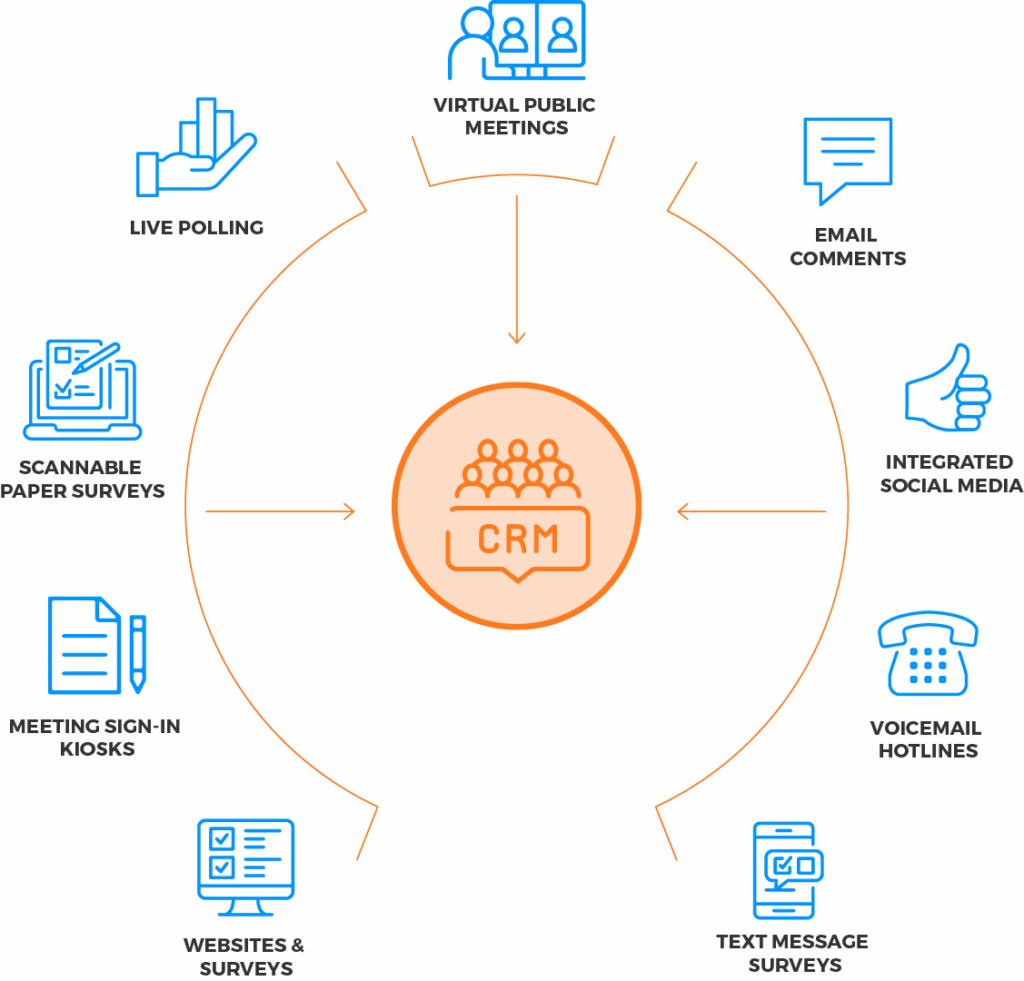
PublicInput’s Resident Database (CRM) provides a centralized place to capture input across channels (surveys, mapping tools, meeting participation, emails, and more) while preserving the context of each interaction. Every comment, response, or contribution is tied back to the participant and the project, creating a living record that grows over time.
Coding Input for Analysis and Action
Capturing input is only the first step. To make it useful, agencies must be able to organize and interpret what they’ve collected.
Coding input (tagging comments by theme, topic, geography, or demographic attributes) creates structure without stripping away meaning.
It allows teams to identify patterns, track emerging concerns, and understand how perspectives vary across communities.
PublicInput’s AI-assisted comment analysis and tagging tools help streamline this process, reducing manual effort while preserving transparency. Teams can consistently categorize input and prepare it for deeper analysis without losing the voice behind the data.
Building a Foundation for Trust and Transparency
When input is captured systematically and thoughtfully, it becomes more than documentation—it becomes a shared point of reference.
Clear records make it easier to explain how community voices informed decisions, respond to follow-up questions, and demonstrate accountability. They also prepare agencies for the next steps: analysis, reporting, and compliance.
If you’d like more background on how thoughtful capture supports downstream analysis, our article on engagement analysis offers additional perspective.
Want to see how a centralized approach to capturing and coding input can support better decisions and stronger engagement outcomes?