Practical Strategies to Overcome Hidden Barriers in Resident Engagement

Every year, PublicInput surveys residents across the country to uncover perceptions about engaging with their local governments. The findings highlight evolving expectations and barriers, offering data-driven insights for agencies committed to more effective engagement.
This blog series covers additional insights not included in the 2025 report.
Every year, PublicInput surveys residents across the country to uncover perceptions about engaging with their local governments. The findings highlight evolving expectations and barriers, offering data-driven insights for agencies committed to more effective engagement.
This blog series covers additional insights not included in the 2025 report. Explore the 2025 results here: https://publicinput.com/wp2025/2025-state-of-community-engagement-report/
Resident Engagement: Why Traditional Accessibility Isn’t Enough
When agencies think about accessibility, the conversation often centers on wheelchair ramps, captioning, or translated materials. While these are critical, they don’t capture the full picture.
In our 2025 State of Community Engagement survey, residents who selected “other” when asked about accessibility challenges pointed to something deeper.
Resident responses revealed:
• Fear of retaliation
• Discomfort with authority figures
• Concern that participation could expose them to risk
These concerns are not technical hurdles. They are emotional and systemic barriers—ones that traditional engagement methods too often overlook.
Why This Matters for Practitioners
Silence in engagement doesn’t always mean opposition—or apathy. Sometimes it means residents don’t feel safe speaking up. If engagement practitioners do not address these underlying fears, the outcomes often result in:
- Vulnerable voices remaining unheard
- Participation data that skews toward the most comfortable and privileged groups
- Decisions are made without a full understanding of community needs
This isn’t just about compliance. It’s about trust. Communities can’t fully engage if they don’t feel protected while doing so.
Practical Ways to Remove Barriers
As engagement practitioners, planners, and communicators, you need strategies that go beyond the basics. Building trust means recognizing not all barriers are physical — many are emotional, cultural, or systemic. Here are a few proven ways to create safer, more inclusive participation environments:
CLARIFY PROTECTIONS AND PRIVACY: Explain how input is protected, stored, and used to reassure residents that participating won’t put them at risk. Use project pages, emails, and meeting summaries to show that input is safeguarded and used appropriately, helping overcome fear or hesitation that might prevent engagement.
ENABLE ANONYMOUS FEEDBACK:
Use PublicInput’s survey or comment tools to let residents share candid input without fear of retaliation. Anonymity creates a safe space, encouraging participation from residents who might otherwise stay silent and ensuring diverse perspectives are heard.
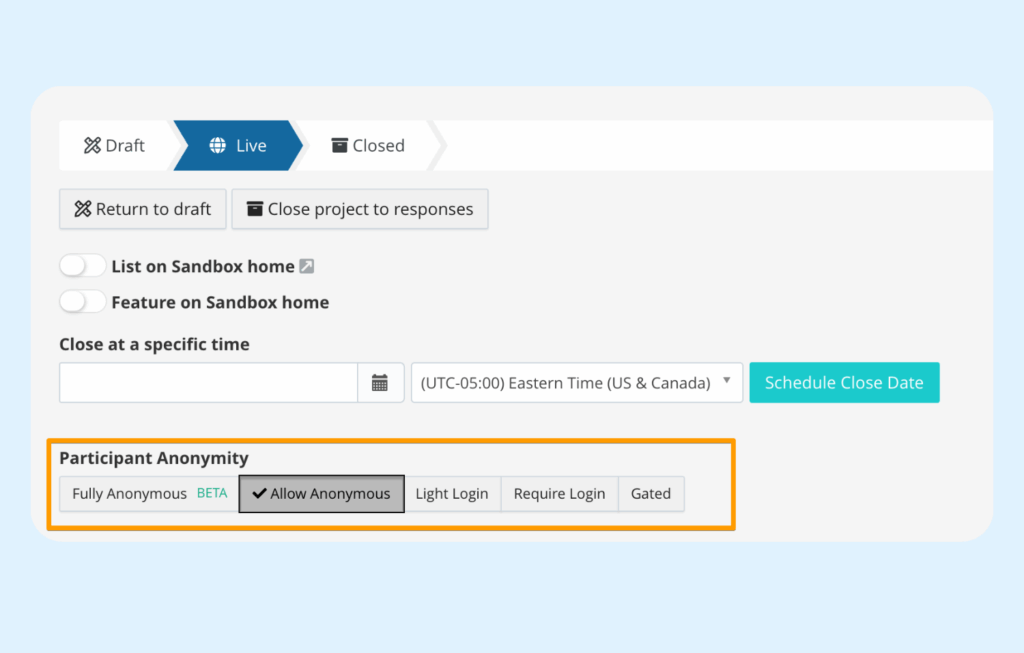
With the PublicInput survey builder easily toggle anonymity settings to collect feedback without revealing participant identities.
OFFER PRIVATE AND REMOTE PARTICIPATION:
Provide residents multiple ways to engage on their terms, including online forms, self-servic0e portals, virtual meetings, and speaker sign-ups. These options let participants schedule public testimony, request interpretation, and connect directly with decision-makers, ensuring comfort and accessibility don’t limit contribution.
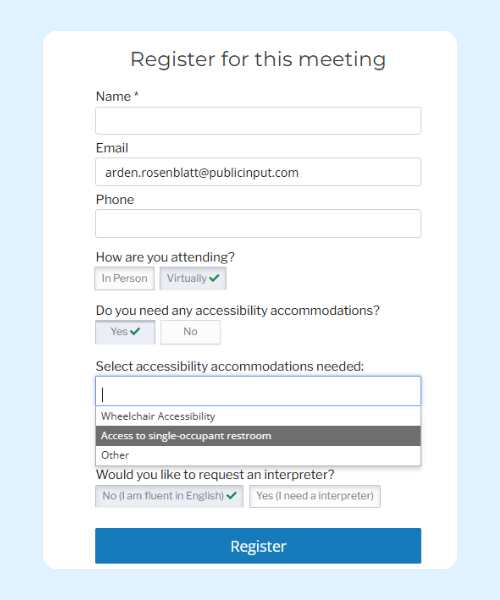
The PublicInput Board Meetings feature streamlines public comment scheduling, interpretation requests, and direct communication with decision-makers.
PARTNER WITH TRUSTED LOCAL GROUPS:
Community-based organizations (CBOs) have established relationships, credibility, and cultural knowledge within their communities, making them effective at reducing fear and systemic barriers to participation. PublicInput’s CBO Module and Network helps agencies identify and manage these partnerships, ensuring outreach is authentic, measurable, and trusted.
MEASURE AND IMPROVE ACCESSIBILITY:
Use analytics and demographic comparisons to see who is participating—and who isn’t. Identify groups that face emotional, cultural, or systemic barriers, then adapt outreach and engagement strategies to ensure every resident has a safe, accessible way to contribute.
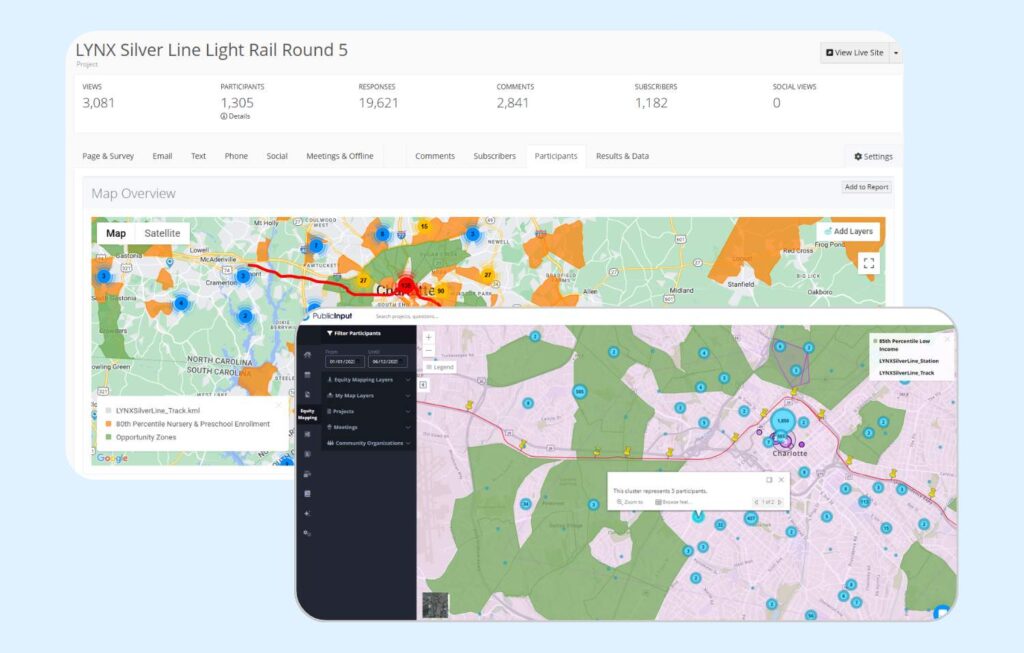
The PublicInput Equity Mapping feature analyzes participation and demographic data to pinpoint outreach gaps and measure engagement reach.
Each of these methods reinforces the same message: your voice matters, and we’ll meet you where you are. By combining empathetic outreach with data-driven tools, agencies can replace fear and uncertainty with confidence, trust, and meaningful connection.
Where to Go From Here
Inclusion isn’t just about ramps or translation, it’s about removing hidden barriers that prevent residents from participating fully.
Agencies that integrate empathetic outreach, flexible participation options, and trusted local partnerships can transform engagement from a transactional exercise into a relationship-building process.
Start by reviewing your current engagement processes:
- Are residents able to participate privately or remotely?
- Do you provide anonymous channels for candid input?
- Are trusted CBOs helping reach underrepresented voices?
PublicInput’s tools help agencies address these questions, track progress, and demonstrate impact, turning fear and uncertainty into trust and meaningful connection.