The Power of Proximity: Why Local Context Drives Resident Engagement

Every year, PublicInput surveys residents across the country to uncover perceptions about engaging with their local governments.
The findings highlight evolving expectations and barriers, offering data-driven insights for agencies committed to more effective engagement.
This blog series covers additional insights not included in the 2025 report.
Close to Home, Closer to Action: How Neighborhood Context Shapes Participation
When it comes to civic engagement, closeness counts.
Each year, PublicInput’s State of Community Engagement Survey asks residents what drives their decision to get involved. And every year, one factor rises above the rest: proximity.
In 2023, 64% of residents said neighborhood issues influenced whether they’d get involved. By 2025, that number had jumped to 72%, with another 68% saying they’re most motivated by what happens within one mile of home. Compare that to just 41% for state and 40% for national issues, and the message is clear — people care most about what happens right where they live.
Takeaway: Local context isn’t a nice-to-have; it’s essential for meaningful participation.
Why Proximity Shapes Participation
Residents engage when issues feel close, personal, and visible. Whether it’s a traffic change on their street or a new development nearby, people are more likely to respond when the impact is tangible.
The 2025 State of Community Engagement Report shows a growing desire for agencies to reach residents directly and digitally. People want to weigh in from where they live and on their own terms, whether that’s responding to an online survey, adding a comment to a virtual meeting, or scanning a QR code on a mailed notice.
This combination of local relevance and flexible access is the sweet spot for engagement today.
Pro Tip: Direct outreach paired with multiple digital touchpoints ensures more voices are heard, not just the loudest ones.
A Real-World Example: Rezoning That Reached Everyone
Rezoning decisions are inherently local, yet participation often skews toward the few residents with strong objections. Charleston County, South Carolina, tackled this by moving from fragmented, paper-heavy processes to a centralized, multi-channel platform.
Residents could weigh in on their terms (by text, voicemail, or online portal ) making participation more convenient, inclusive, and representative.
The results?
- Broader and more balanced feedback
- Previously missing voices finally at the table
- Stronger trust between residents and the county
See how Charleston County transformed engagement.
Practical Strategies for Engaging Residents Locally
If you want residents to participate, start where they are. Engagement works best when it feels local, flexible, and relevant. To reach residents effectively:
MAP ENGAGEMENT: identify who’s being reached and where gaps exist. Mapping tools help focus outreach by neighborhood, language, or demographics.
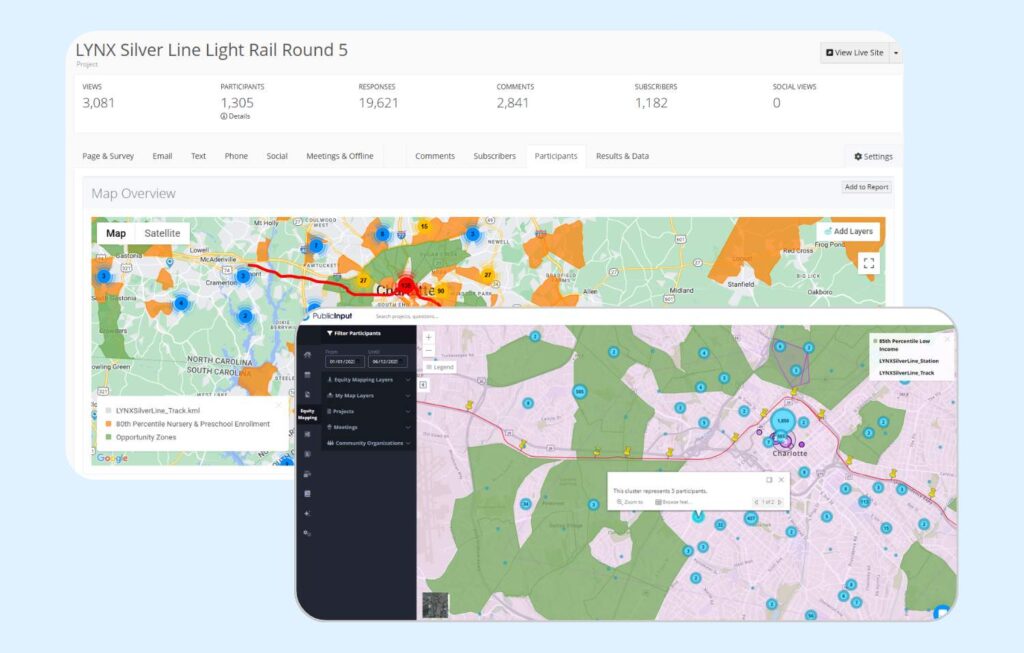
Above Image: PublicInput’s Equity Mapping feature helps agencies visualize who’s engaged and where gaps exist — map participation by geography, demographics, and community groups.
HYPERLOCALIZE OUTREACH: target neighborhoods, districts, or communities to reflect residents’ lived experiences. Segmentation features help reach the right audiences efficiently.
PARTNER WITH COMMUNITY: partnering with community-based organizations (like churches, neighborhood associations etc.) helps expand reach and ensure diverse voices are represented.
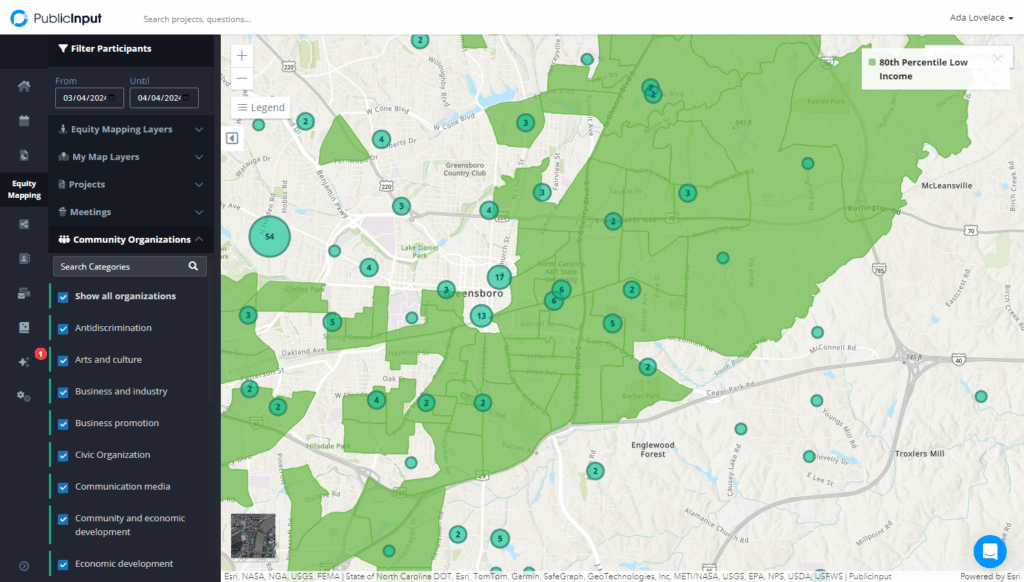
Above Image: PublicInput’s CBO Module helps agencies go beyond awareness — to discover, map, and manage trusted local organizations through a living network of community partners
OFFER FLEXIBLE OPTIONS: combine online comments, virtual meetings, self-service portals, and other formats so residents can engage on their terms. Multi-channel govtech tools like PublicInput make it easy to coordinate and track engagement through these modes.
SHOW IMPACT: report back on how resident input shaped decisions through dashboards and project archives, reinforcing trust and encouraging future participation.
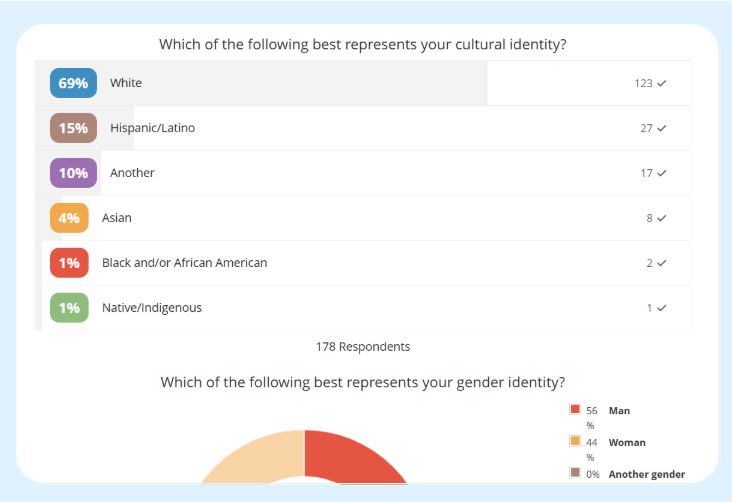
Above Image: Visualize participation and track progress with interactive reports and a centralized dashboard.
Quick Win: Even small shifts (like adding a neighborhood-level survey or collaborating with a local community leader) can dramatically broaden engagement.
Local governments don’t need a national campaign to drive participation. They need a neighborhood strategy. Once implemented, these strategies have the power to help agencies grow participation, gather more representative feedback, and build stronger community trust.
Next Steps: Explore & Apply the Insights
Want to see how your community compares? The 2025 State of Community Engagement Report offers actionable insights and strategies that help agencies meet residents where they are.
Explore the Full Report: https://publicinput.com/wp/2025-state-of-community-engagement-report/
See these strategies in action. Book a demo to discover how PublicInput helps you reach every neighborhood, combine digital and offline participation, and turn resident input into meaningful, actionable insights.