How GTC Engaged 1,500+ Residents Across Nine Counties Without Adding Staff

Recognized with the Resourceful Innovator Award, the Genesee Transportation Council (GTC) unites a nine-county, 1-million-resident region in upstate New York (anchored by Rochester and spanning urban, suburban, and rural communities) around transportation safety, even with a small staff and limited resources. This case study shows how GTC built an accessible, trusted forum for collaboration to support its Safe Streets and Roads for All (SS4A) planning.
A Small Staff, A Nine-County Challenge
As the region’s MPO, GTC needed to unite municipalities, transportation agencies, advocates, and community partners around a shared understanding of roadway safety and the Safe System Approach across communities with varying levels of SS4A experience. The challenge: create an accessible, trusted forum that supported participation at scale and captured actionable feedback, without overextending a small staff.
“With a small staff serving a nine-county region, delivering an event of this scale without a centralized engagement platform would have required multiple systems, separate spreadsheets, manual tracking, and considerably more staff time before, during, and after the event,” said Lori Maher, GTC’s Program Manager for Community Engagement.
One Platform Before, During, and After the Summit
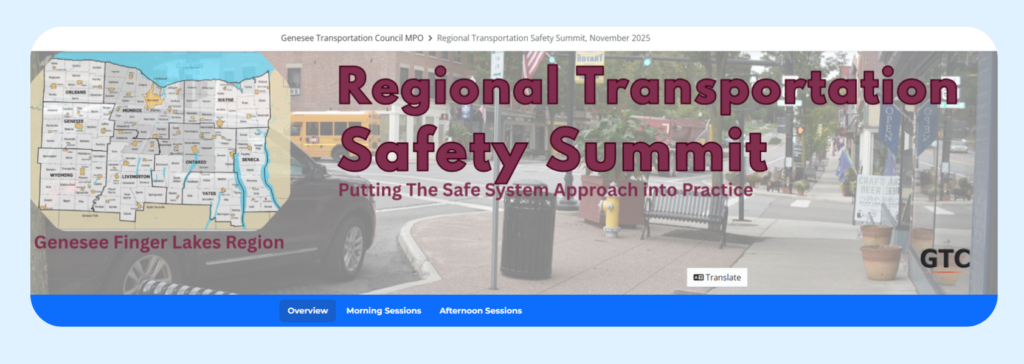
GTC used PublicInput to power its first-ever Regional Transportation Safety Summit, a hybrid event for stakeholders across the nine-county region. PublicInput served as the central hub, handling event registration, exhibitor tables, promotional email campaigns, attendee communications, and the post-event survey, while the project webpage anchored all event information. GTC also livestreamed the full-day summit, extending participation to those who couldn’t attend in person.
“PublicInput let us put our limited staff capacity into the substance of the Summit, developing the program, coordinating speakers and exhibitors, and engaging attendees, rather than administrative logistics,” Maher said.
After the event, GTC turned the platform’s recorded video and session transcripts into summaries for each session.
“Using the platform’s recorded video and session transcripts, we extended the value of the Summit well beyond the event itself and created a lasting record of the discussion and ideas shared,” Maher said.
Regional Participation and Actionable Feedback for SS4A Planning
The summit drew stakeholders from all nine counties, including municipal leaders, transportation professionals, advocates, and community partners, for more than 180 survey participants and 1,300+ views of summit materials beyond live attendance. Hundreds of survey responses and open-ended comments captured regional priorities and ideas, feeding directly into local road safety plans, audits, and future community summits.
A Repeatable, Resource-Efficient Model for What’s Next
The centralized hub also sustained engagement: more than 120 new subscribers opted in for continued SS4A updates, giving GTC a reusable model for future regional safety initiatives.
“That investment continues to pay dividends: rather than starting from scratch for our 2027 Summit, we can build on the contact lists, participation data, and lessons learned from this first event, making it more efficient to organize while helping us grow participation over time,” Maher said.
Turning Regional Collaboration Into Safer Streets
GTC’s Regional Transportation Safety Summit shows how intentional, accessible engagement can turn a single event into lasting regional momentum, strengthening SS4A planning while building a foundation for ongoing collaboration. For agencies coordinating across jurisdictions, it’s a proven model for turning complex regional efforts into collective action. Request a demo to see how your team can do the same.