Four Key Strategies for Successful Community Needs Assessment Surveys

A community needs assessment only works if it reaches the people whose needs you are trying to understand.
Community Needs Assessments have grown in popularity for their listen-first approach to improving community services. They are a thoughtful, systematic method of identifying and confirming the needs of the people you serve. As more public agencies undertake them, some clear patterns have emerged for what makes them work — and what makes them fall short.
The Center for Urban Transportation Research describes community profiles developed through needs assessments as essential in establishing a summary of baseline conditions and trends in a community and study area, providing the context for impact assessment and project-based decision-making. That foundation is only as strong as the reach of the survey process that built it.
Strategy 1: Meet People Where They Are
When people hear the word “survey,” most picture a paper form or an online questionnaire. Those formats alone almost always miss key portions of the community. The starting question for any needs assessment is not “what format should we use?” It is “who do I want to reach?” From there, outreach tactics can be developed to engage and ask questions where the audience already is.
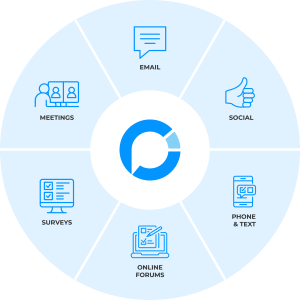
Agencies that have run successful needs assessments have approached this creatively. Taking tablets to local farmers markets and conducting in-person conversations, using social media advertising targeted to specific areas and demographics, deploying interactive text message surveys, placing physical signs with short URLs or text-to-participate codes, and sending embedded email surveys to key community stakeholders have all proven effective in reaching communities that would not have responded to a standard online survey.
The format of a survey is not neutral. It is a decision about who gets to participate.
Your tactics will depend on your audience, so start with a thoughtful consideration of their routines and needs before deciding on your approach. Government survey and project tools built for government support this kind of multi-channel deployment from a single platform, so input collected across formats stays unified rather than siloed.
Strategy 2: Keep Things Simple
Resist the urge to go more complex, and your engagement rates will thank you.
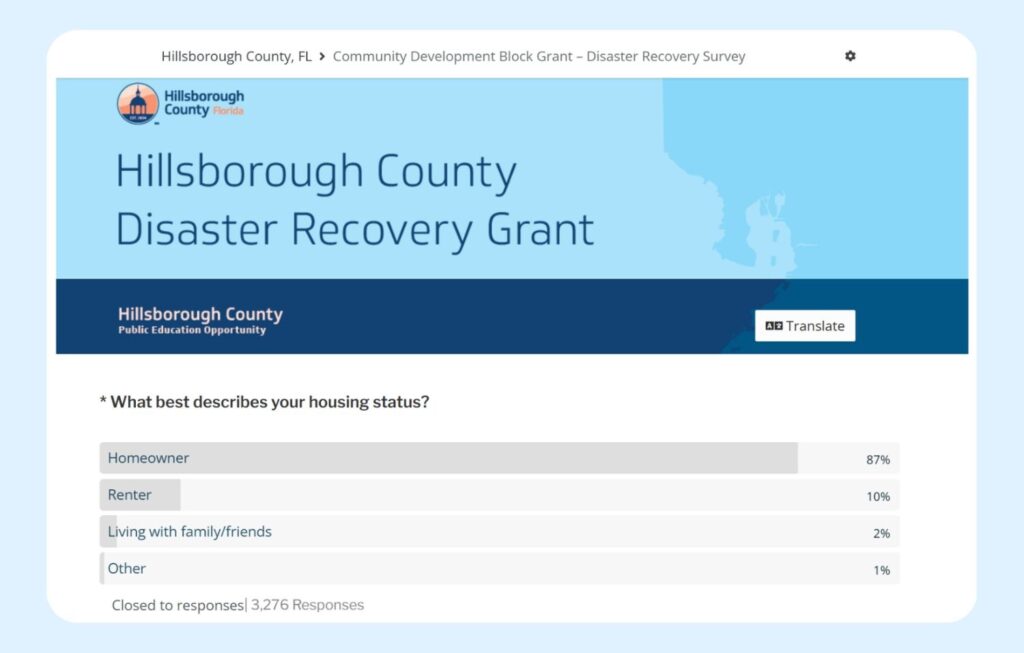
When crafting a survey, the goal is not to conduct academic research. It is to understand people. With that in mind, and with the reality of increasingly limited attention spans, the most effective surveys eliminate unnecessary questions and ask for feedback only on things the agency can actually act on.
Matrix or Likert scale questions can be used to quantify sentiment across different topics. But qualitative analysis tools can often yield comparable insights from a smaller number of open-ended questions. The temptation to add more questions in the hope of capturing more data frequently produces the opposite result: lower completion rates and thinner insights.
Resist the urge to go more complex, and your engagement rates will reflect it.
Strategy 3: Leave Room for the Unexpected
Across thousands of public engagement surveys, the questions that have consistently yielded the most powerful insights are the ones that created space for participants to say something the agency did not anticipate.
The insights gathered from a question like “Would you like to see longer service hours?” will pale in comparison to “What, if anything, prevents you from accessing services?” The second question differs in providing a genuine opportunity to understand the community, while still surfacing information about service hours if that is what residents care about.
Closed questions confirm what you already think. Open questions tell you what you have not thought to ask.
The difference between a needs assessment that produces actionable intelligence and one that produces a filing cabinet of responses often comes down to whether the survey design left room for the community to surprise you.
Strategy 4: Capture Contact and Follow Up
A community needs assessment is just one interaction in a longer relationship with the people you serve. It is particularly important to use that opportunity to create pathways for follow-up communication, because a survey that collects input but loses the respondent afterwards has only done half the job.
When residents are asked why they do not engage more often, not knowing what will happen to their feedback is consistently ranked as one of the biggest deterrents. By capturing contact information and closing the loop, agencies lay the groundwork for increased participation and community trust over time.
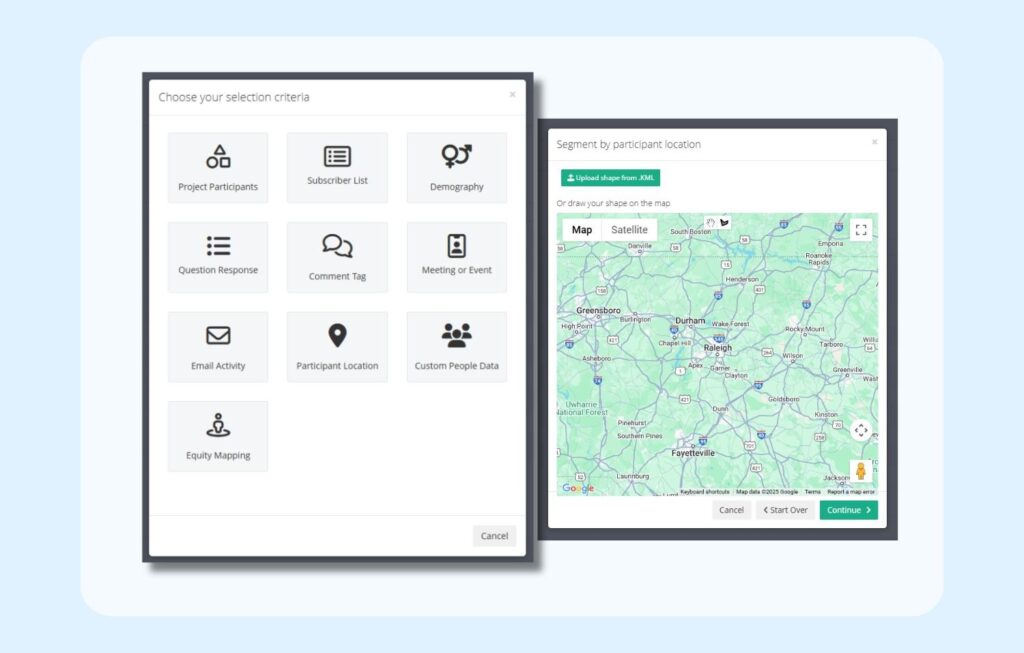
If your agency is not already managing email, phone, and mailing contacts in a structured system, needs assessment surveys are a natural starting point. A purpose-built resident engagement CRM keeps participation history, contact records, and follow-up communication in one place, so the relationship built through a needs assessment does not disappear when the survey closes.
Online and offline resident outreach tools that connect directly to a contact record mean that the next time an agency reaches out to a community, it is building on a foundation of prior engagement rather than starting over. Public engagement analytics and reporting closes the loop further, making it easy to show communities what their input produced.
Initiating a community needs assessment is the right time for local governments to integrate online and in-person outreach efforts into a unified approach. If your agency is running those efforts through disconnected tools, there is a more effective way to work.
Explore what purpose-built community engagement software can do to support the full needs assessment process, from initial outreach through follow-up communication.