Turning Public Input Into Actionable, Defensible Decisions

Public input is supposed to inform decisions. But when a project is over and someone asks, “How did you get here?” having collected comments is only part of the answer.
Agencies need to be able to show who they tried to reach, who participated, what they heard, and how that input shaped the decision. That is what turns community input into defensible engagement data, useful beyond the comment period and a clear record teams can stand behind.
The challenge is that public input rarely comes through one channel or in one format. Surveys, text messages, phone calls, emails, online comments and conversations at public meetings can all contribute to the same decision. If those pieces are scattered across systems, it becomes harder to see the full picture while the project is still underway.
A defensible decision starts with a clear picture of participation
Before an agency can explain what public input means, it needs to understand where that input came from.
Four questions can help:
Who did we try to reach? The communities affected by the project, the outreach methods used and the channels available for participation.
Who actually participated? The people who responded, commented, called, attended or otherwise took part, across all engagement channels.
What does that participation tell us? Participation can be compared with community demographics and geography to help identify who may be missing from the conversation. That gives teams an opportunity to adjust outreach while there is still time to do so.
How did we use what we heard? Which themes, concerns or preferences informed the decision, and where did other considerations lead the agency in a different direction?
Together, these questions create context around the input itself. A list of comments can show what people said. A complete engagement record can help explain whose input was represented, how it was interpreted and how it factored into the decision.
The record matters because decisions need context
This is where engagement documentation becomes more than a reporting exercise.
Federal programs provide some clear examples. FEMA hazard mitigation plans, metropolitan transportation planning requirements and HUD Consolidated Plans all include requirements around documenting public participation, comments and how input was considered. Other agencies may be working within state or local requirements, accessibility and civil rights obligations, public records rules or their own established processes.
The specific requirements vary, but the underlying need is similar: an agency should be able to explain how it conducted engagement and what happened to the input it received.
That context can matter when a decision is presented to elected officials, reviewed by a funding partner, questioned by a member of the public or revisited months later by someone who was not involved in the original process.
The strongest record does not simply prove that engagement happened. It helps tell the story of how input became a decision.
Where disconnected engagement makes that harder
Most engagement teams are not starting from scratch. They already have tools for surveys, email, meetings, phone calls and other forms of outreach.
The problem comes when those tools create separate pieces of the record.
A survey response lives in one system. Email outreach is tracked somewhere else. Meeting comments may be in a spreadsheet. Phone participation may have its own log. When it is time to understand the results, someone has to bring those pieces together.
That creates opportunities for information to get lost or counted inconsistently. It also makes it harder to answer questions while the project is still active.
- Are we hearing from the neighborhoods we expected?
- Are some communities participating less than others?
- Are the concerns coming through one channel different from those coming through another?
- Have we documented how the input affected the recommendation?
By the time teams start reconciling the data for a final report, the opportunity to act on what they are seeing may have passed.
Keep the full picture together while the project is underway
A centralized engagement record gives teams a different way to work.
PublicInput brings SMS, phone, voicemail, online forms and in-person participation into one system, connecting interactions to the same resident and project record.
That makes it possible to look at participation across channels instead of treating each one as a separate activity.
Equity Mapping adds another layer of context. Teams can compare participation with Census demographics and other geographic data, including imported ArcGIS layers, to see where participation is strong and where gaps may exist.
That information is most useful when there is still time to do something with it.
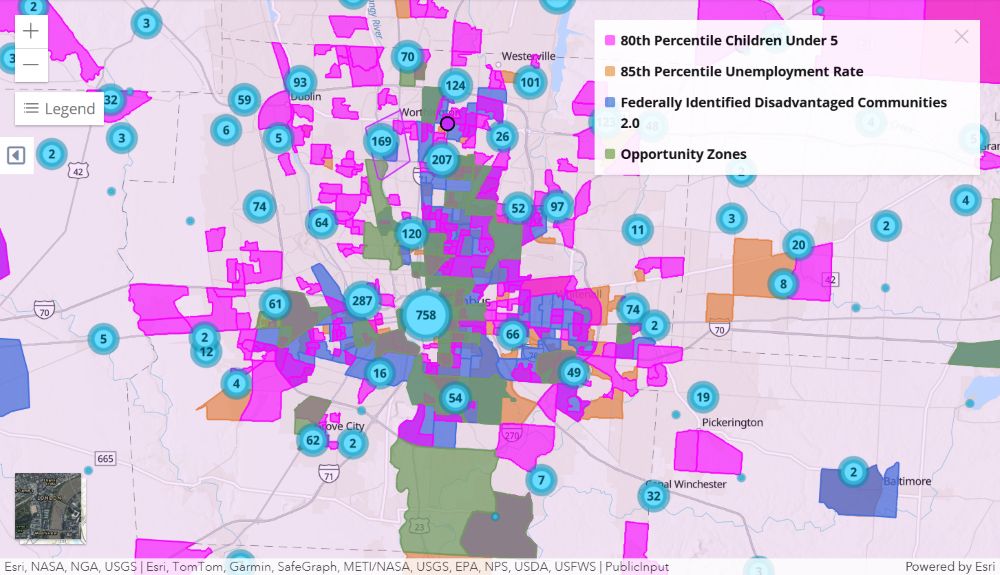
See where participation is coming from and where gaps may exist while there is still time to adjust outreach.
If a project is not reaching a particular area or community, the team can adjust outreach. If one channel is reaching people another is not, the team can see that in the broader participation picture. The engagement record becomes something the team uses to manage the project, not something it reconstructs after the fact.
From community input to a decision you can explain
No engagement process guarantees that everyone will agree with the final decision. That is not the purpose of public input.
The goal is to make the decision-making process clear.
When an agency can show who it sought to reach, who participated, what it heard and how that input was considered alongside the other factors involved in the decision, it has more than a collection of comments. It has a documented basis for explaining how it got there.
And when that record is built throughout the project, preparing the final report is easier too.
Public input is most useful when it can inform the decision, not just document that a conversation happened.
See how government survey and engagement software can help your team connect community input to the decisions that follow.