
The Hidden Compliance Risk in How DOTs Collect Public Comments

Is Your Project Manager’s Inbox a Public Record?
Picture a scene that plays out every day across state transportation agencies. A project manager finalizes a public meeting notice, scrolls to the bottom, and adds their email address as the contact for comments. It takes seconds. It feels helpful. It gives the public a direct line to the person who knows the project best.
Over the next few weeks, comments arrive. They land alongside meeting invites, contractor questions, and internal review requests. The comment period closes. The project advances. The project manager moves on.
So what happens to those comments?
Under federal law, the answer is not flexible. For many agencies, current practice does not align with what the regulations require.
What the Regulation Actually Requires
Federal transportation law is explicit about how public input must be handled and documented.
For federally funded highway projects, 23 CFR § 771.111(h)(2)(vi) requires that agencies include written statements from the public received during the announced comment period as part of the official project record submitted to FHWA.
That phrase, announced comment period, matters. The moment an email address is listed as a submission channel, messages received through that channel may be considered part of the public record for the project.
A parallel requirement in 23 CFR § 450.210(a) requires agencies to maintain a documented public involvement process.
A process that exists within an individual inbox does not meet the intent of a documented, consistent, and auditable public involvement process.
For Environmental Assessments, 23 CFR § 771.119(g) requires that, as applicable, agencies provide FHWA with comments received and responses to those comments when recommending a Finding of No Significant Impact (FONSI).
In practice, this means agencies must be able to account for comments received and demonstrate how they were addressed.
While specific documentation requirements may vary depending on project type and level of environmental review, the expectation of a complete and accessible public comment record is consistent across federal guidance.
Why a Personal Inbox Creates a Real Compliance Risk
This is not a theoretical concern. When public comments are routed through individual email accounts, several predictable issues can arise.
- Comments that never arrive, silently.
Agency email systems may filter, quarantine, or reject messages from external senders. Members of the public receive no confirmation, no tracking number, and no indication their input was received. From their perspective, they participated. From the official record’s perspective, their input may not be captured. - Staff transitions break continuity.
Project managers transfer, take leave, or exit the agency. Their inbox does not follow the project. Comments submitted during this transition period may go unread, leaving gaps in the record with limited visibility. - No systematic response process exists.
Regulations require not just collection, but documented responses. Comments that are not formally logged cannot be tracked, categorized, or responded to consistently. This makes compliance obligations more difficult to demonstrate. - Title VI and LEP risks increase.
Federal Title VI requirements, along with Executive Order 13166, require that outreach and accommodation processes be accessible and well-documented. When ADA or language assistance requests are routed through an individual email, sometimes even a consultant’s inbox, agencies may face challenges demonstrating that those obligations were fulfilled. This creates disproportionate risk for Limited English Proficiency populations. - The project record becomes difficult to defend.
Once comments are dispersed across inboxes, reconstructing a complete record can become time-consuming and uncertain. In the event of legal scrutiny, incomplete or difficult-to-trace records can delay approvals or create additional risk for the project.
For agency leadership, this is not just a workflow issue. It is an enterprise risk management concern.
This Is More Common Than It Appears
This is not an isolated practice. Reviews of publicly available project notices across numerous state DOTs show that individual email addresses are frequently used as the primary, and sometimes only, channel for written comments.
In some cases, those email addresses belong to consultants at private firms. This means public input is being routed into systems that may not be structured to serve as official public records.
The practice is understandable. Many projects generate a manageable number of comments, and setting up a formal system can feel unnecessary.
But manageable is not the same as defensible. What works operationally in the short term may not meet regulatory expectations when it matters most.
What a Defensible Process Looks Like
Agencies are increasingly moving toward more structured approaches that reduce risk without adding significant burden.
A basic improvement is the use of a project-specific shared inbox tied to the project, not an individual. This helps ensure continuity and reduces dependency on any one staff member.
A more complete approach is the use of a centralized engagement platform that automatically logs, timestamps, and acknowledges each submission. This shifts public comment collection from an informal task to a structured, auditable workflow.
With this approach:
- Comments are captured and acknowledged
- Records are centralized and persistent
- Responses can be tracked and documented
- Reporting can be generated in a consistent and reliable format
This also reduces the need to reconstruct records across multiple inboxes when documentation is requested.
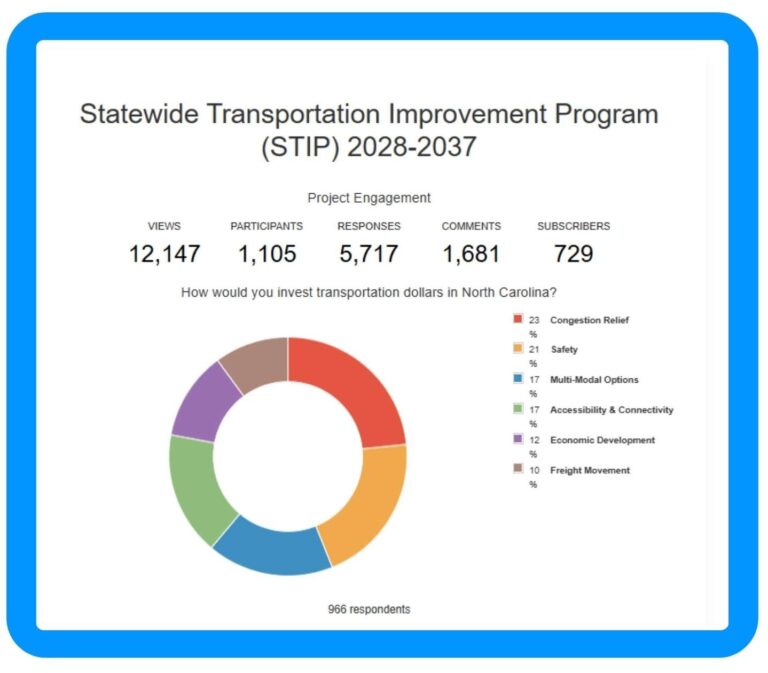
North Carolina DOT’s approach to centralizing public engagement for its STIP process demonstrates how agencies can move from fragmented comment collection to a more unified and documented system. This approach supports the ability to capture, track, and report public input across project phases.
A Question Worth Asking
The next time a project notice is issued, it is worth asking a simple question.
If FHWA requested the full written comment record for this project tomorrow, could it be produced completely, accurately, and without delay?
If the answer depends on one person’s inbox, the process introduces a level of risk that may not align with federal expectations for documentation and completeness.
Moving Toward a More Reliable Standard
As public expectations and regulatory scrutiny continue to increase, agencies are rethinking how public input is collected, managed, and documented.
Those that adopt centralized, structured approaches are not only improving efficiency. They are also reducing risk and strengthening the integrity of their decision-making process.
Learn more about how PublicInput can help DOTs move toward a more reliable standard.