Multichannel Public Outreach Platform for Government Agencies
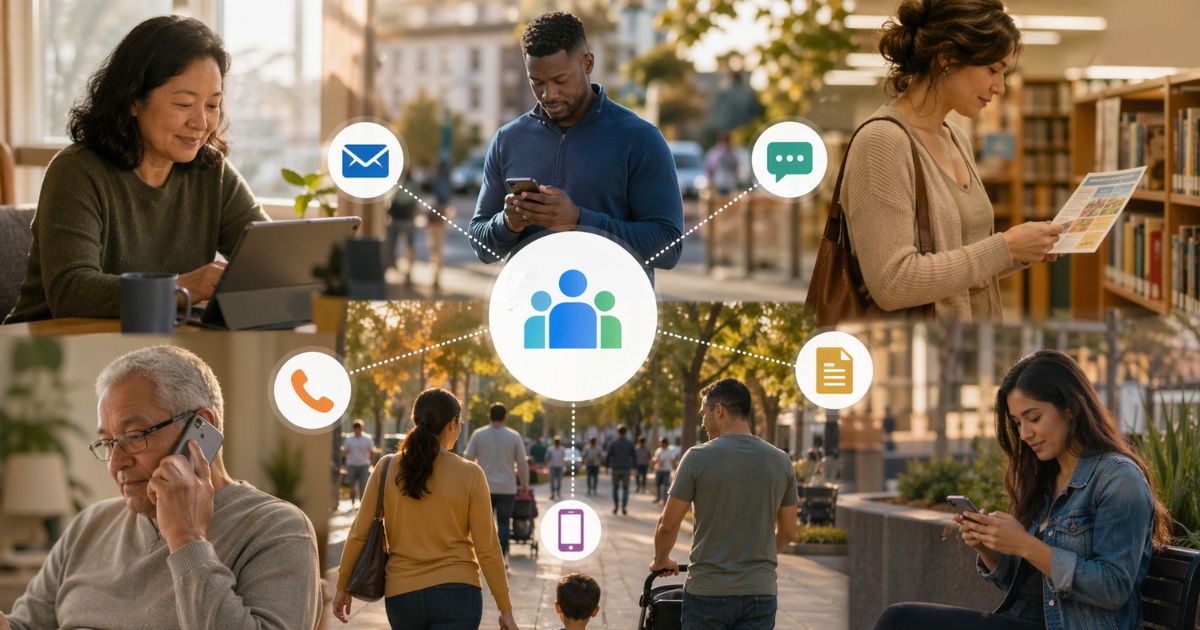
Residents don’t all live in the same channel. Some read emails. Others respond to texts. Others pick up a flyer at the library or need a phone call to learn that a project is happening in their neighborhood. Agencies that reach the broadest cross-section of their community tend to have one thing in common: their outreach meets residents where they are, not just where it’s easiest to send a message.
The challenge is coordination. The channels exist. They just aren’t working together. Email goes out through one tool. SMS through another. Social media through a third. Each channel has its own list, its own record, and its own staff workflow. The result is duplicate outreach to some residents and no outreach to others, with no unified picture of who has actually been reached.
Online and offline resident outreach built for government is designed to solve that coordination problem, bringing every outreach channel into a single platform where resident data, outreach history, and engagement records are shared across all of them.
Why Single-Channel Outreach Leaves Residents Unreached
Most agencies are already using multiple outreach channels. The challenge surfaces when those channels operate independently rather than as a coordinated system. Three structural gaps show up consistently.
Channel gaps. Residents without reliable internet, without smartphones, or without comfort using digital platforms are systematically missed when outreach defaults to email and online forms. That isn’t a small or incidental population. It correlates directly with the communities most likely to be affected by the infrastructure, housing, and transportation decisions agencies are making.
Coordination gaps. When channels are managed with separate tools, there’s no unified view of who has been reached. Some residents receive duplicate outreach across every channel. Others receive nothing because they don’t appear in any individual list. Without a shared resident record, coordination is manual, imprecise, and inconsistent across projects.
Documentation gaps. Outreach records scattered across email platforms, SMS tools, and spreadsheets can’t be consolidated into a defensible engagement record. When a regulator or community advocate asks which populations were notified and through which channels, assembling that answer from disconnected systems takes significant staff time and often produces an incomplete picture.
Coordination is what makes broad reach possible. When channels share a record, agencies hear from residents they’d otherwise miss.
What a Multichannel Outreach Platform Covers
A multichannel public outreach platform is a coordinated system for reaching residents across every channel: email, SMS, phone, social media, QR codes, embedded web forms, and in-person tools, from a single platform, with resident data and outreach history shared across all of them.
When outreach channels are siloed, each one operates independently. Staff don’t know which channel drove a particular response. The outreach record is scattered across platforms that were never designed to talk to each other. A multichannel platform changes that. Every interaction is tied to the same resident profile and the same project record, so the agency always knows who has been reached, through what, and when.
Here’s what that looks like across the channels that matter most to government outreach:
Email outreach: Still the backbone of project communications for most agencies. A multichannel platform makes it more useful by connecting email to the resident record, so staff know who opened, who responded, and who still needs a different approach.
SMS and text messaging: For residents without reliable internet or a smartphone, a text message is often the most direct line in. It meets people where they are without requiring anything they don’t already have. For many communities, it’s the highest-performing channel available.
Phone: Not a fallback for residents who can’t use digital tools. It’s a full participation channel in its own right. Automated phone outreach reaches seniors, residents with lower digital literacy, and anyone who simply prefers a call over a screen.
Social media capture: Residents are already having conversations on social platforms about projects that affect their neighborhoods. A multichannel platform captures that input and ties it to the project record, so it counts alongside survey responses and meeting comments rather than disappearing into a feed.
QR codes: A simple but effective bridge between physical spaces and digital engagement. A QR code at a transit station, library, or community center puts government survey and project tools directly in front of residents where they already spend time, without requiring them to search for the project online.
Embedded web forms: Capturing input where residents already are, on agency websites, project pages, and partner organization sites, without requiring them to navigate somewhere else to participate.
Workflow automation: The coordination work that happens behind the scenes. When a comment period is closing, reminders go out. When a resident submits input, they receive confirmation. Outreach sequences run consistently across projects without staff having to rebuild them from scratch each time.
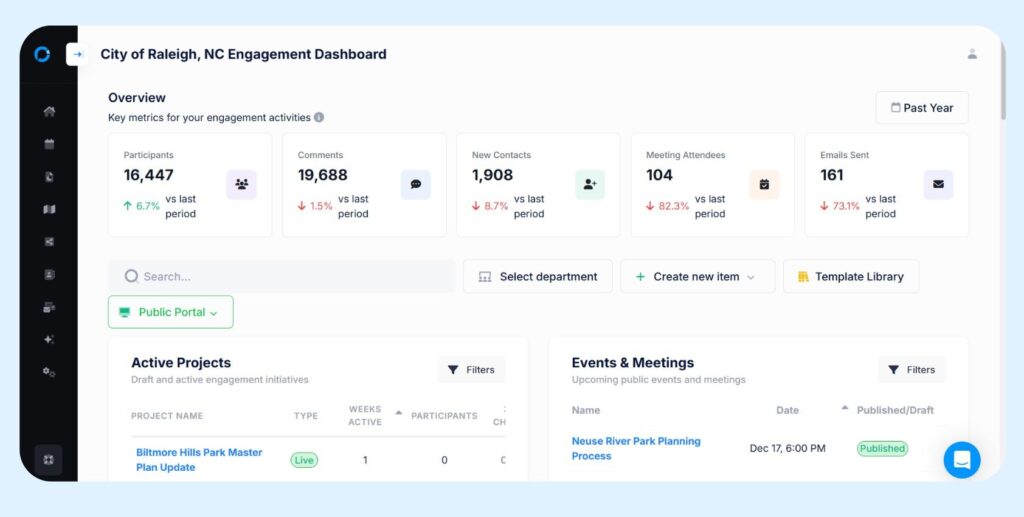
PublicInput’s multichannel outreach platform coordinates email, SMS, phone, social, and in-person channels from a single environment, with every interaction tied to the same resident and project record.
The Coordination Layer That Makes It Work
A list of channels isn’t multichannel. What makes a platform multichannel is the coordination layer underneath: the shared resident record, the unified outreach history, and the connection between channels that turns parallel activities into a coherent strategy.
Every channel interaction feeds the resident engagement CRM. When a resident responds to an SMS, that response is tied to their profile. When a different team sends email outreach for a related project six months later, the system knows that resident has already been engaged and what they said. The outreach record compounds over time rather than starting from scratch with every project.
Segmentation makes outreach strategic rather than broadcast. Agencies can target residents by geography, language preference, engagement history, or project relevance. Outreach reaches the right people, including residents who haven’t been engaged before and need a different channel or a different approach to participate.
The outreach record is also the compliance record. Every attempt, every channel, every response is documented in a format that can be produced for a Title VI audit, an open records request, or a leadership review without manual reconciliation.
Channels that operate independently produce scattered records and inconsistent reach. Channels that share a common platform produce a coordinated strategy and a defensible record.
Who Needs a Dedicated Multichannel Outreach Platform
The clearest indicator is any agency where outreach coordination across separate tools is creating overhead that a single platform could eliminate.
Multiple channels, separate tools: Any agency managing email, SMS, and social outreach through separate platforms is absorbing coordination overhead that a single platform eliminates, along with the documentation gaps that come from disconnected records.
Equity and Title VI obligations: Any agency required to document multilingual and multichannel outreach efforts needs a record that shows which populations were reached through which channels, and a platform that makes producing that record straightforward rather than labor-intensive.
Multi-project programs: Any agency running concurrent engagement initiatives needs outreach coordination across projects, not just within them. When the same resident is relevant to multiple projects, a platform that tracks cross-project outreach history prevents duplication and ensures no one falls through the gaps.
Reporting requirements: Any team spending significant time reconciling outreach records from multiple systems before they can produce a participation report is absorbing a cost that a coordinated platform eliminates. The record should be complete because it was built that way, not assembled after the fact.
From local government engagement teams to state and regional DOT and MPO agencies, the reporting obligation is the same: show who was reached, through which channels, and when.
Outreach That Reaches Everyone
Agencies committed to broad, representative community participation are already doing the work. The question is whether the tools in place make it possible to do that work efficiently and produce a record that reflects the full effort.
Multichannel outreach managed through separate tools produces coordination overhead, documentation gaps, and inconsistent reach. A coordinated platform changes what’s possible, not by adding more channels, but by making the channels already in use work together.
See how online and offline resident outreach built for government makes coordinated, documented, multichannel engagement achievable for every project and every team.