Defensible Public Engagement: What Reviewers Look For

Your engagement is probably better than your record of it
Most public engagement work is better than the file that documents it. Staff translate flyers, set up pop-ups at the library, take calls, and read every comment. Then the plan goes to FEMA, FHWA, FTA, HUD, or the state, and the reviewer sees only what made it into the record.
That gap is what “defensible” really means. Defensible engagement isn’t a different kind of engagement. It’s good engagement with a record that shows who you reached, what you did with their input, and how you made room for people who are usually missing.
Here’s what reviewers look for, and how to make sure your record answers their questions before they ask.
Where engagement actually gets reviewed
The quality of your outreach is tested in plan reviews and compliance reviews far more often than in court.
When courts overturn local decisions, it’s usually over procedure: notice, agenda wording, or meeting format. Those cases turn on how a meeting was held, not on how well the agency listened.
Who you reached and how you responded gets tested elsewhere: in the plan approvals, program reviews, and grant requirements that come with federal and state funding. That work usually lands on planners, grants managers, and program staff, not just the communications team.
Three questions every reviewer asks
The programs differ, but reviewers keep asking the same three things:
- Who did you reach? Not how many meetings you held, but who actually took part.
- What did you do with what you heard? How input was considered, and why some of it wasn’t adopted.
- Who might you have missed? Whether underrepresented residents had a real chance to weigh in.
Here’s how that shows up in a few common plans:
| PLAN OR PROGRAM | WHAT THE RECORD NEEDS TO SHOW |
|---|---|
| FEMA local hazard mitigation plan | How the plan was prepared, who was involved, and how the public was involved |
| MPO transportation plan and TIP | How public input was considered and answered, plus a summary of comments and their disposition |
| HUD Consolidated Plan | A summary of comments, including those not accepted and why. This repeats for substantial amendments and annual performance reports. |
| FTA Title VI program | A summary of outreach, including efforts to reach minority and limited English proficient residents |
| Comprehensive plans, zoning, and budgets | Public notice, hearings, and a record of comments, as required by state and local law |
None of these ask whether you held a meeting. They ask whether you can show your work.
What a thin record costs
When the record comes up short, the cost is rarely a lawsuit. It’s time, funding, and staff hours spent rebuilding what already happened.
- Funding at risk. Many federal and state grants require an approved plan or a documented public process before money flows. A gap in the record can delay or block eligibility.
- Findings with a deadline. Compliance reviews often end with findings that need a corrective-action response within weeks.
- Projects on hold. Approvals can stall while staff reconstruct what outreach happened and who it reached.
- Staff time. Rebuilding a record after the fact pulls planners and program staff away from the work in front of them.
- Harder conversations. When council or residents ask “who did you hear from?”, a vague answer weakens trust in the decision, even when the process was sound.
Some of these are process gaps. Many are record gaps: the outreach happened, but nobody could show who it reached.
Build the record while the project runs
Each habit below helps answer one of the three reviewer questions while you can still act on it. For more on why documentation works best as part of the process, see Documenting Community Engagement with Confidence.
1. Reach people before decisions are made
Outreach that starts after a vote is hard to defend, no matter how good it is. Having your own list of residents makes it easier to start early.
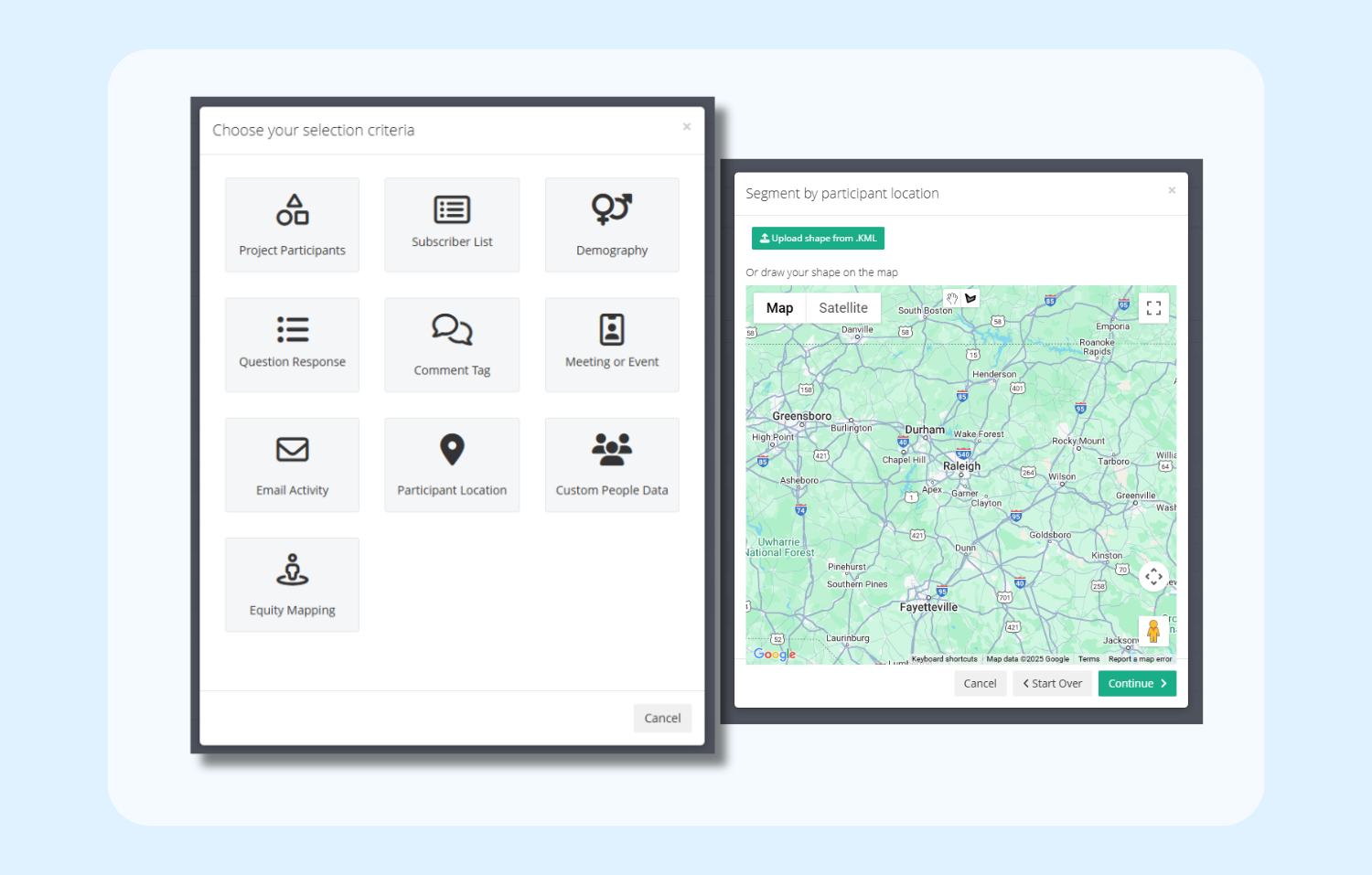
With PublicInput, agencies build and keep a list of residents who have opted in, and reach them by project, geography, or interest by email and text. You aren’t waiting on social media or a news story to get the word out.
2. Keep one record of who took part
Survey responses, meeting sign-ins, emails, and phone comments usually live in different places. Pulling them together at the end is slow and easy to get wrong.
PublicInput ties each interaction to the individual resident automatically. You can see participation by person, by neighborhood, and by project without merging spreadsheets. The same record helps when a public records request comes in.
3. Check your reach halfway through, not at the end
The question “who did we miss?” is most useful while you can still do something about it.
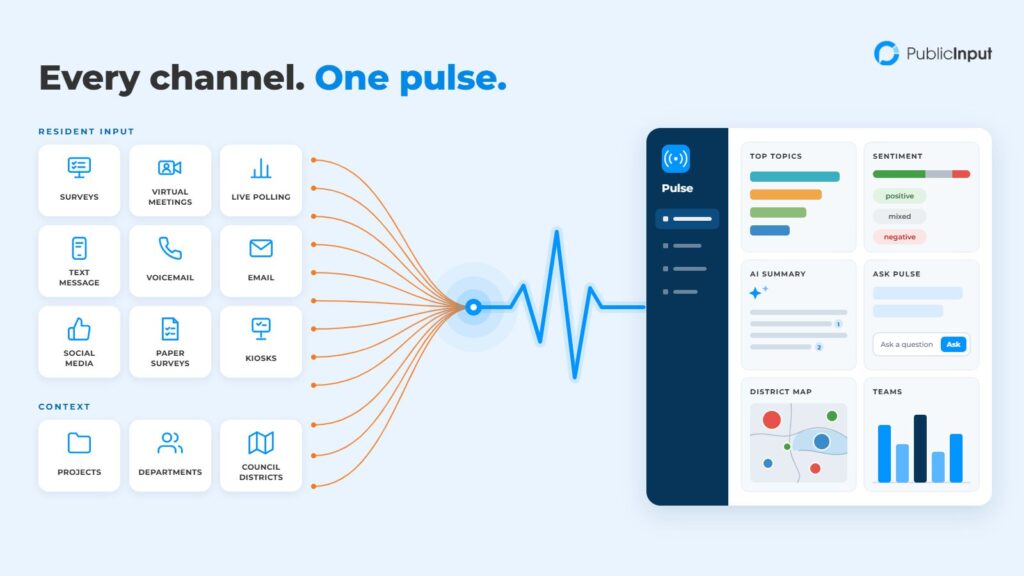
With Equity Mapping turned on, each project or meeting in PublicInput adds its own layer to a map. You can compare where participation is coming from against Census demographics, Qualified Census Tracts, and other equity data, then adjust outreach before the comment period closes.

4. Close the loop on what you heard
Reviewers want to see that input was considered, including input you didn’t act on. Residents want the same thing. Track the main themes as comments come in, and note how each was handled: adopted, used to adjust the plan, or not adopted and why.
That becomes your comment summary for the plan. It also becomes a short “what we heard and what we did” update you can send back to the people who took part, which makes them more likely to show up next time.
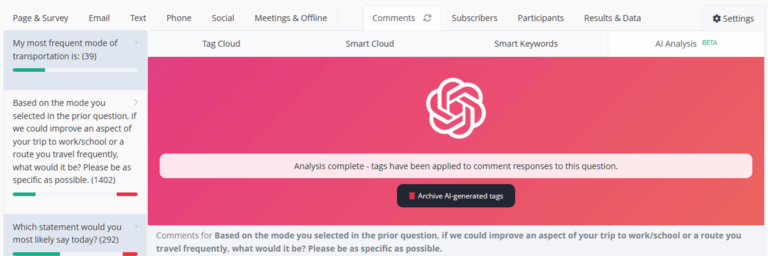
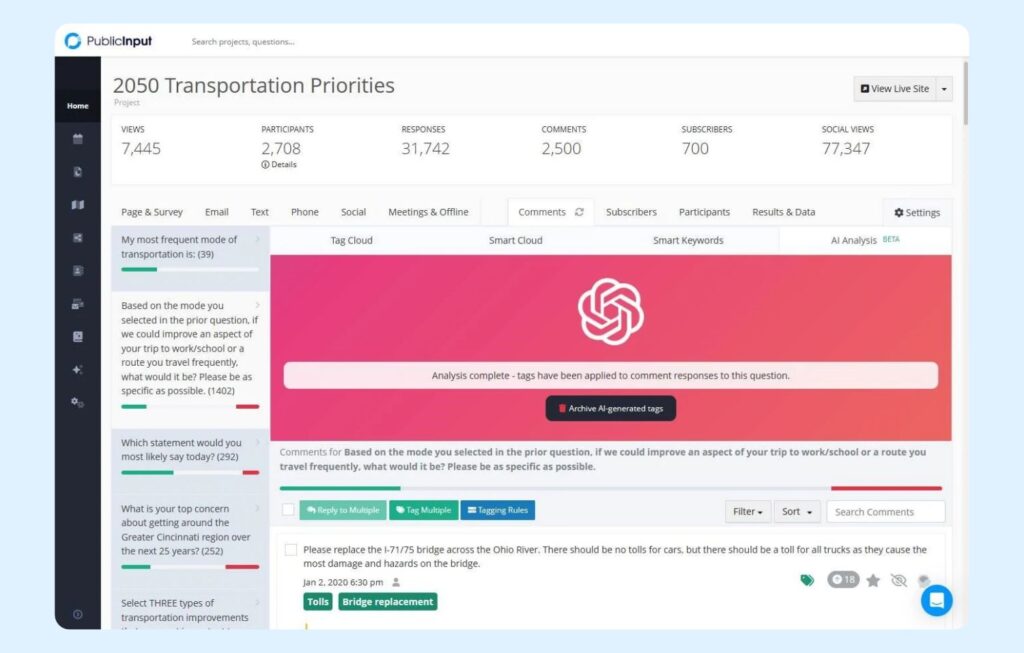
PublicInput’s AI comment analysis suggests themes, tags comments, and flags sentiment, so staff start from a draft instead of a blank spreadsheet. Your team reviews and edits the themes before they’re applied, so the final call stays with you. A word cloud of those themes shows what came up most, and it can go straight into a shareable report for residents or reviewers.
5. Keep proof of how you got the word out
Reviewers don’t just ask who showed up. They ask how people found out: which channels, which languages, and how far ahead of a decision. Those details are easy to lose and hard to recreate.
Keep notices, translated materials, and send dates with the project as you go. When someone asks how you reached Spanish-speaking residents on the east side, the answer is already in the file.
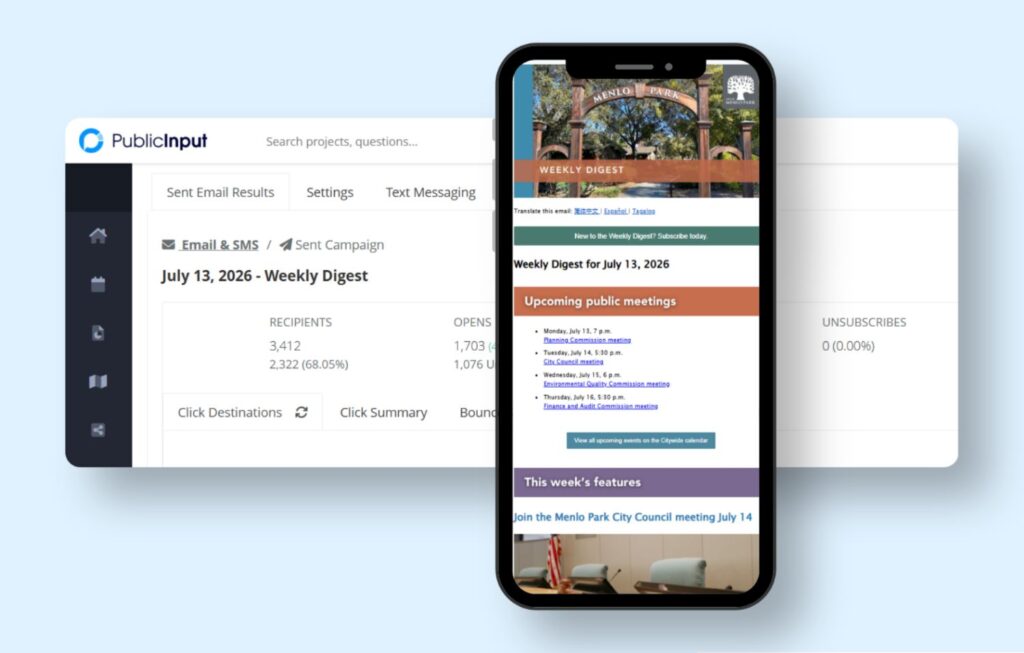
When you send email and text updates through PublicInput, that outreach is tracked with the project: who was reached, when, and how. Emails can carry translated versions right in the message, and text surveys can be translated too, so your language access is part of the same record.
A quick check before your next plan goes out
If a reviewer called tomorrow, could you answer these from what’s already in the file?
- Who took part, and from which neighborhoods?
- Which groups did you set out to reach, and did you reach them?
- When did outreach start, relative to key decisions?
- What did you change because of public input, and why didn’t you act on the rest?
- Which materials were translated, and into which languages?
If any of those would take a week to answer, start there on your next project. Good engagement deserves a record that shows it.
See how agencies use PublicInput to keep their engagement record in one place.