Buncombe County, NC: Building Community Trust Through Disaster Recovery Engagement
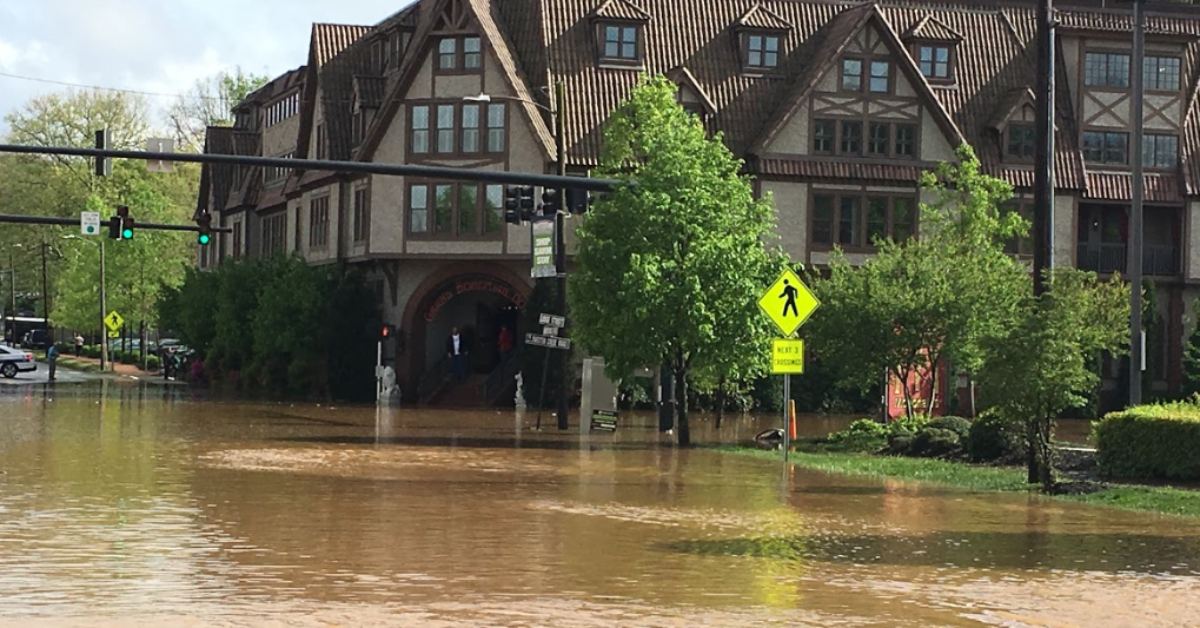
Recognized with the Champion of Community Trust Award, Buncombe County demonstrated how transparency and public accountability can guide disaster recovery at scale. This case study shows how resident feedback informed real project decisions and fostered trust across multiple municipalities.
Community Profile: Buncombe County, North Carolina
Buncombe County, in western North Carolina, is home to roughly 270,000 residents across Asheville and surrounding towns. With 14% of residents living below the poverty line and a mix of urban, suburban, and rural communities, the county reflects a range of needs and perspectives that shape how local leaders approach planning, communication, and service delivery.
The Challenge of Coordinated Disaster Recovery
In the aftermath of Tropical Storm Helene, Buncombe County faced the complex task of guiding recovery across multiple jurisdictions while maintaining public trust. Leaders needed to gather meaningful input from residents, align priorities with six municipal partners, and clearly communicate how recovery decisions were being made. Without a centralized engagement approach, recovery efforts risked becoming fragmented, opaque, and disconnected from the people most impacted.
How PublicInput Was Used
Buncombe County used PublicInput as a central hub for recovery communication and engagement through its Buncombe Recovers / Helene Recovery site and the Engage Buncombe portal.
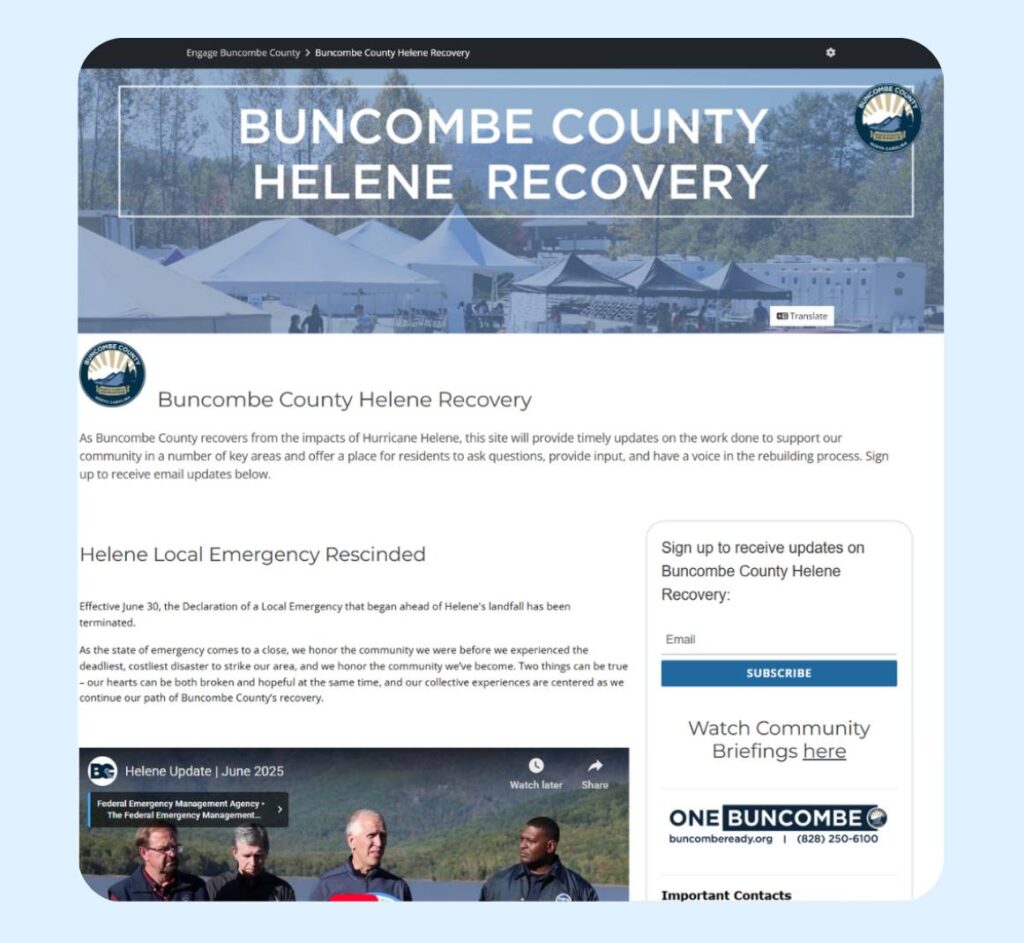
Using the platform, the Buncombe team was able to share regular updates on critical recovery areas, including housing, infrastructure, natural resources, and public health.
Residents were also invited to participate in surveys, most notably the Envision Buncombe long-term recovery survey, which gathered input from more than 2,600 residents.
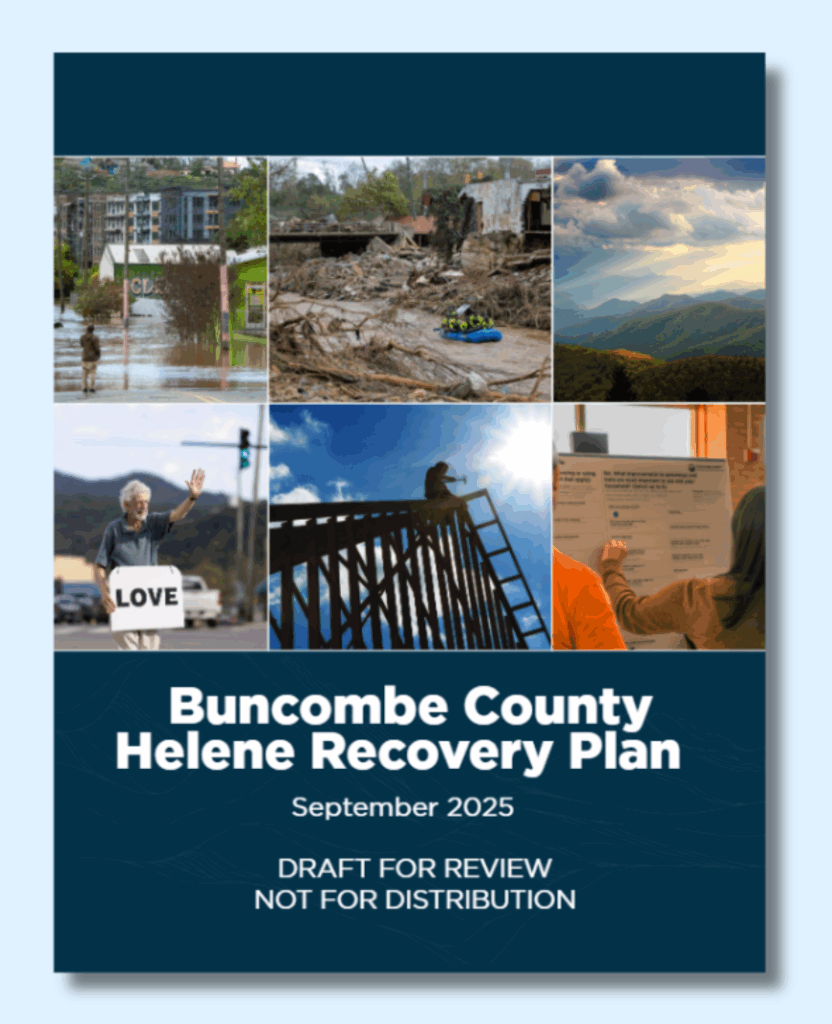
These survey results directly informed the development of the Helene Recovery Plan, a roadmap of 114 projects co-developed with six municipalities. PublicInput also supported email alerts, event tracking, and feedback dashboards, making it easy for residents to stay informed and engaged throughout the recovery process.
The Results: Trust Built Through Transparency and Action
Buncombe County’s community-centered approach translated resident input into concrete outcomes across trust, operations, and long-term resilience. The results highlight how engagement shaped recovery at every level:
People & Community Trust
- 2,600+ residents provided input via the Envision Buncombe survey.
- Recovery pages received 25,000+ views, keeping the community informed.
- Survey results highlighted key priorities: 74% infrastructure, 55% disaster preparedness, 53% wildfire prevention.
- Resident feedback directly shaped the 114-project Helene Recovery Plan, reinforcing confidence that public voices mattered.
Operational Clarity and Accountability
- Leaders used real community data to prioritize projects and align them with Recovery Support Functions.
- The recovery plan was formally adopted through a transparent public process.
- Ongoing progress is tracked via a public-facing Helene spend-tracking dashboard.
Long-Term Resilience and Regional Alignment
- Recovery efforts strengthened coordination across six municipalities.
- Engagement centered voices from across towns, ZIP codes, and heavily impacted communities.
- Outcomes advanced a more equitable, resilient, and trusted countywide recovery model.
Together, these outcomes show how Buncombe County turned resident input into transparent, actionable decisions that strengthen trust, streamline operations, and build lasting community resilience.
Build Trust and Turn Community Feedback Into Real Results
Buncombe County’s recovery effort shows what’s possible when public engagement becomes the foundation of disaster recovery. See how transparent, community-driven engagement can strengthen trust and guide complex efforts in your own community.