Understanding Virtual vs. Hybrid Public Meetings for Government Agencies

Choosing a meeting format is one of the first decisions agencies make when planning public participation. It shapes who can attend, what compliance obligations apply, and what the tools need to do. Virtual and hybrid meetings are often grouped together as the modern alternatives to fully in-person formats, but they carry different requirements, and understanding that distinction helps agencies plan more effectively.
Accessible public meeting management built for government supports both formats. This piece explains what each one involves and where the practical differences lie.
The Basic Distinction
A virtual meeting takes place entirely online. There is no in-person component. All participants, including board members, staff, and the public, join remotely through video or phone.
A hybrid meeting combines both environments simultaneously. Some participants are physically present in a room together, while others join remotely by video or phone. Both audiences participate in the same meeting at the same time.
The hybrid format expands access and serves communities where in-person participation carries cultural or civic weight. It also significantly increases the coordination complexity involved in running the meeting well.
Where the Compliance Requirements Diverge
Virtual meetings have a relatively contained compliance surface. One participation channel to manage, one record to produce, one set of access requirements to meet.
Hybrid meetings are more complex. When in-person and remote participants share the same meeting, state open meeting laws apply specific standards that virtual-only formats don’t trigger in the same way. The most important is the “seen and heard” requirement: board members joining remotely must be able to fully participate, not just observe. They need to hear proceedings clearly, be recognized to speak, and satisfy voting requirements under their state’s open meeting law.
In California, SB 707 adds further obligations specific to hybrid formats: mandatory two-way access for all attendees, a recess requirement if remote access is disrupted during the meeting, and language access requirements for communities with significant non-English-speaking populations.
The compliance stakes for hybrid meetings are meaningfully higher than for virtual-only formats. Agencies planning to run hybrid meetings benefit from knowing that upfront, not after the meeting record is questioned.
The Accessibility Difference
Both formats require ADA accommodations. Real-time captions, screen reader compatibility, and accessible participation options apply regardless of format.
Hybrid meetings add an equity obligation that virtual meetings don’t carry in the same way: in-person and remote attendees must have equal footing. A remote participant who can’t hear the room clearly, can’t see who is speaking, or can’t be recognized to comment isn’t participating on equal terms with the person sitting in the chamber.
Phone-in access adds a third dimension. For residents without reliable broadband or comfort with video platforms, the phone line is the most practical way to join. In a well-run hybrid meeting, phone-in participation works as smoothly as any other channel.
Accessible doesn’t mean making accommodations available on request. It means building the meeting so that every participant, regardless of how they join, can take part fully from the start.
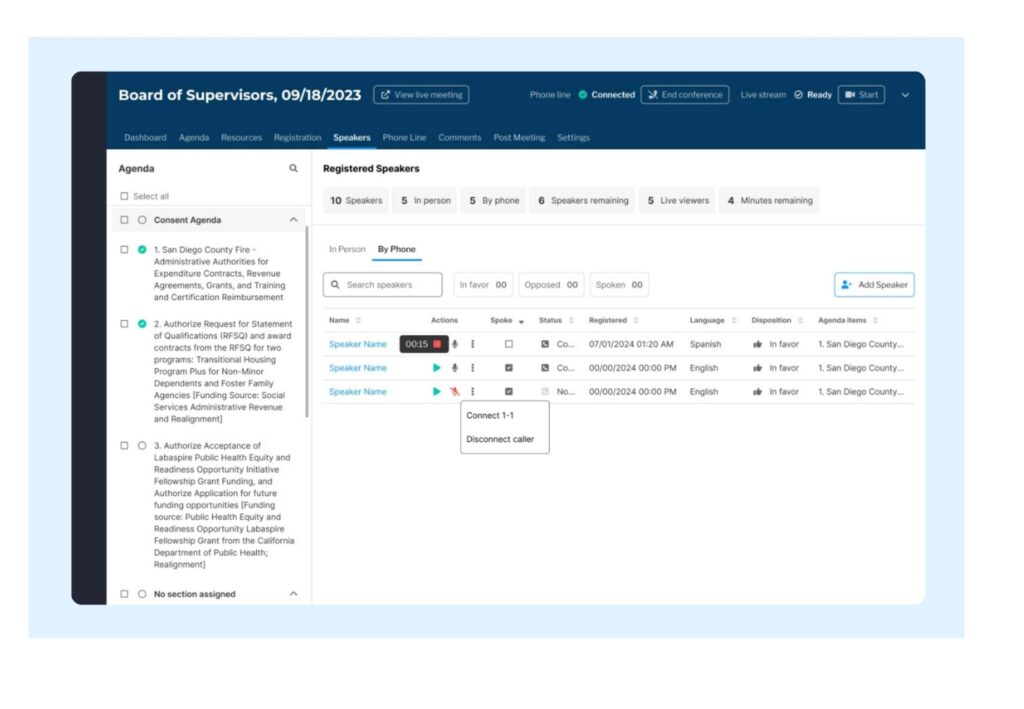
PublicInput’s meeting management dashboard brings every participation channel into one manageable view, so no attendee falls through the cracks regardless of how they join.
What Each Format Requires From Your Tools
A virtual meeting can be run with a reliable video conferencing platform that includes captioning, recording, and public comment capture. The coordination surface is manageable.
A hybrid meeting requires more. Managing three simultaneous participation channels: in-person attendees, video participants, and phone-in callers, in real time creates the conditions for gaps when tools aren’t designed to handle all three together. Speaker queues fragment across separate systems. Chat logs don’t automatically become part of the official record. Transcripts require manual cleanup. The “seen and heard” integration between the physical room and the virtual stream has to be deliberate, not assumed.
For local government engagement teams and transportation agencies running formal public processes, the format choice has direct implications for the platform choice. A tool adequate for a virtual meeting may fall short for a hybrid one.
Choosing the Right Format
Neither format is the right answer in every situation. Virtual meetings are simpler to run, easier to document, and can reach more participants when geography or schedule is a barrier. Hybrid meetings serve communities where in-person participation matters, whether for trust, accessibility, legal reasons, or the nature of the decision being made.
The most useful question isn’t which format is better. It’s whether the tools in place can actually support the format being used, and whether the record that comes out of it will hold up.
If your agency is running hybrid or virtual public meetings and working through the platform question, see how accessible public meeting management built for government supports both formats with the compliance, accessibility, and documentation tools each one requires.