Hope, Candor, and the Front Line: Reflections from ICMA 2026

Every fall, city and county managers from across the country gather for the ICMA Annual Conference. This year in Long Beach, with the nation approaching its 250th anniversary, the conversation kept returning to two big questions: what is local government for, and how do we do it well when times feel uncertain?
ICMA marked the anniversary with A Compass for Public Service, a booklet that places the Constitution and the Declaration of Independence alongside ICMA’s own Code of Ethics. It’s a fitting reminder that the daily work of local government connects to something much older and bigger.
Two keynotes stayed with us, and both came back to the same idea. Whether you were in the room or not, here’s what we took home.
You are the front line
Historian and Pulitzer Prize winner Jon Meacham opened the conference with a message for everyone in the room: democracy is an expression of our hearts and minds, and local government leaders are the front line of making it work.
He pointed back to the founding creed that all men are created equal as the reason this work matters. For local government, the word “all” is the hard part. It’s easy to hear from the residents who already show up. It’s harder to hear from the parent working two jobs, the neighbor who speaks Spanish at home, or the part of town that has stopped expecting anyone to ask.
The ICMA Code of Ethics says it plainly. In Tenets 4 and 9, managers commit to serving the best interests of all community members and to encouraging active engagement between residents and their local government.
Honest input starts with care
The next morning, Kim Scott, author of Radical Candor, spoke about leadership. Her central point: the best leaders care personally about their people and are willing to be direct with them. When people don’t feel cared for, they either go quiet or vent.
Communities work the same way. When residents don’t believe their input matters, most of them stay silent, and a few loud voices fill the room. Neither gives leaders an honest picture of what the community needs.
Honest input has to be earned. Make it easy to take part, make people feel heard, and show them what changed because they spoke up.
What we heard from managers
Between sessions and conversations at our booth, a few themes kept coming up:
- More channels, same question. Local governments have more ways than ever to reach residents, but many still can’t easily answer one basic question: who are we actually hearing from?
- Language is still a barrier. Reaching residents who speak languages other than English came up again and again.
- Elected officials want to see progress. Some city councils, county commissions, and boards have made engagement an official goal, and staff need a clear way to show it’s working.
- AI is welcome when you can check its work. Managers are interested in AI summaries of public feedback, as long as they can trace the answers back to what residents actually said.
- Nobody wants to start over. New tools need to work with the systems teams already rely on.
Three questions every manager should be able to answer
1. Who are we hearing from, and who’s missing?
Comparing who participated with who lives in your community shows the gaps before a decision is made, not after. PublicInput’s Equity Mapping layers participation on top of Census data and your own GIS maps. Staff can see which neighborhoods are weighing in, which aren’t, and where to focus outreach next.
2. Can residents take part in their own language without having to ask?
Many residents hesitate to request translation. That’s why we believe in “don’t make me ask”: offer translation by default on surveys, project pages, and meetings. PublicInput lets residents switch to their own language, from more than 100 options, on their own.
3. Can we show elected officials what residents actually said?
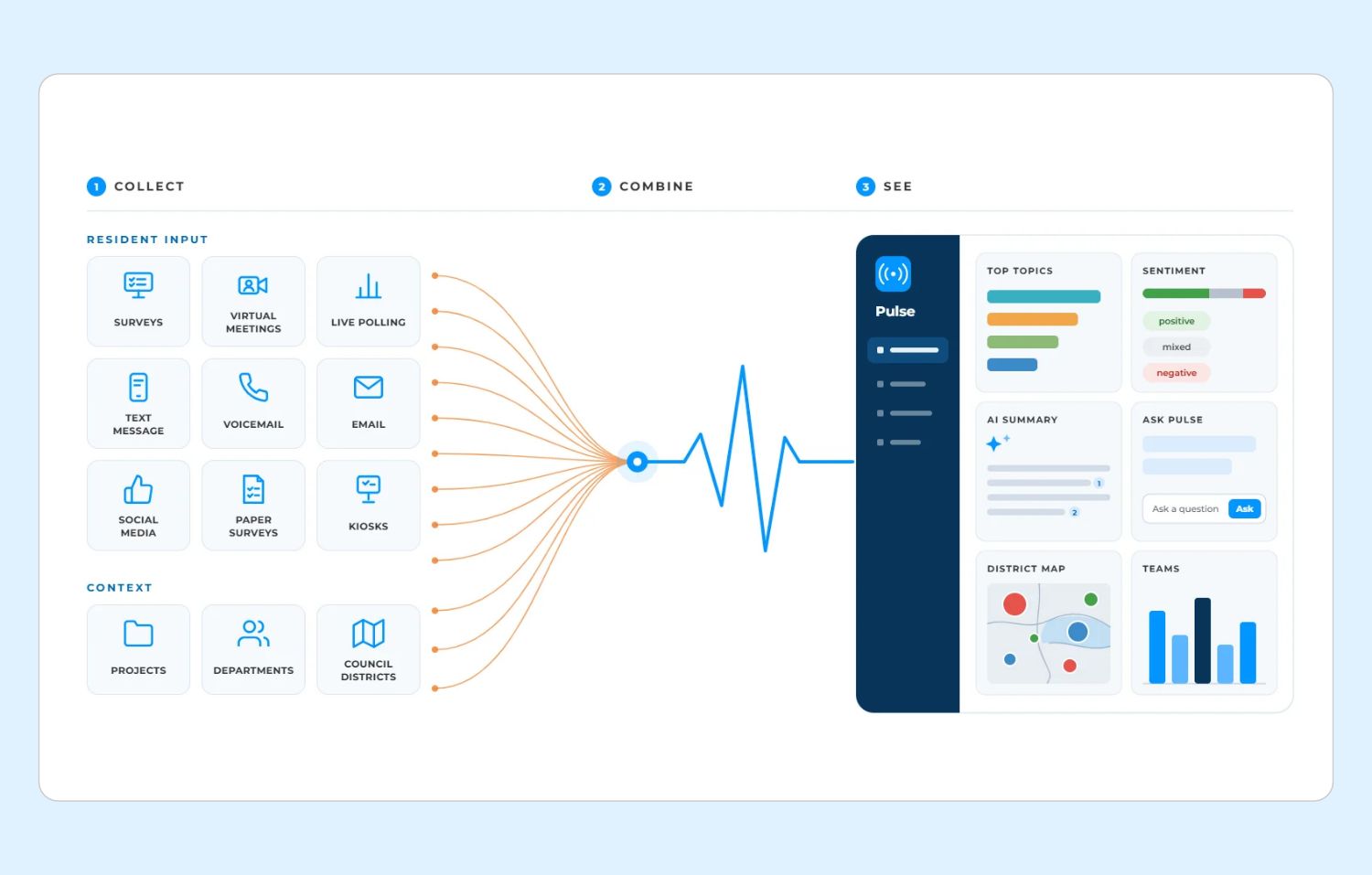
Pulse brings input from surveys, meetings, comment forms, voicemail, and email into one view. It highlights top themes and lets staff ask plain-language questions, with every answer linked back to the original comments so it can be checked before it reaches elected officials.
Looking ahead
Meacham reminded us that communities find a way forward through the habits of constructive citizenship. Scott reminded us that honest input depends on care. Local government practices both every day, one meeting, survey, and conversation at a time.
Thank you to everyone who stopped by to talk with us in Long Beach.
Hear from more of your community
We’d love to show you how other cities and counties are doing it. Book a free 30-minute conversation with an engagement expert.
Schedule a conversation