

Budget Planning for Cities and Counties: Why Community Engagement Matters
When budgets are tight and the pressure is high, engaging the public might feel like one more thing to squeeze in. But here’s the truth: Community engagement during budget planning isn’t just nice to have—it’s a strategic advantage. It builds trust, informs better decisions, and helps ensure that limited dollars go where they’re needed most.
The Government Finance Officers Association’s (GFOA) Guide to Designing a Local Budget says . . .
“If the budget is the most important policy document that a local government produces, then it follows that the budget, if done well, can build credibility with the public.”
Across the country, teams are finding ways to move from behind-the-scenes budgeting to more transparent, community-informed planning, without needing extra staff or extended timelines. Here’s how that’s playing out.
The Budgeting Paradox: High Stakes, Low Flexibility
Many of the department and organizational leaders we work with share similar challenges:
-
-
- Strict fiscal year deadlines
- Limited financial resources
- The need to justify every expense to leadership or elected officials
-
“The traditional budget has long been criticized for being slow to adapt to changing conditions. . .” — GFOA
That’s why PublicInput is built to help agencies support budget-focused engagement, without requiring teams to start from scratch each year. With PublicInput, you can:
-
-
- Launch engagement quickly with templates aligned to fiscal timelines
- Identify and prioritize community funding needs efficiently
- Capture clear, defensible data for use in presentations or reports
- Reuse and adapt engagement assets year-over-year to stretch limited funds
-
Quick Case Study: City of Charlotte, NC
To quickly gather input on community priorities, the City of Charlotte launched a simple, easy-to-complete budget survey. It generated:
-
-
- 900+ total responses
- 440+ open-ended comments
- 18,000+ total response points
-
This helped staff and council understand what residents care about and share that openly.
Breaking Out of Zero-Sum Budgeting
“A pooled resource often produces a zero-sum competition…one department is pitted against another.” –GFOA
When budgets are tight, departments often compete instead of collaborate. And without a shared public voice in the mix, it’s easy for “fairness” to take a back seat.
PublicInput offers a shared space where:
-
-
- All departments can collaborate to gather budget input in one place
- Residents can access a central hub for budget input
- Data can be segmented by geography, demographics, or topic
-
This coordinated approach promotes fairness and transparency, especially when resources are limited and trade-offs are inevitable.
Pro Tip: Use demographic insights to identify who you’re hearing from—and who you’re missing. Built-in filters help you adjust outreach in real time.
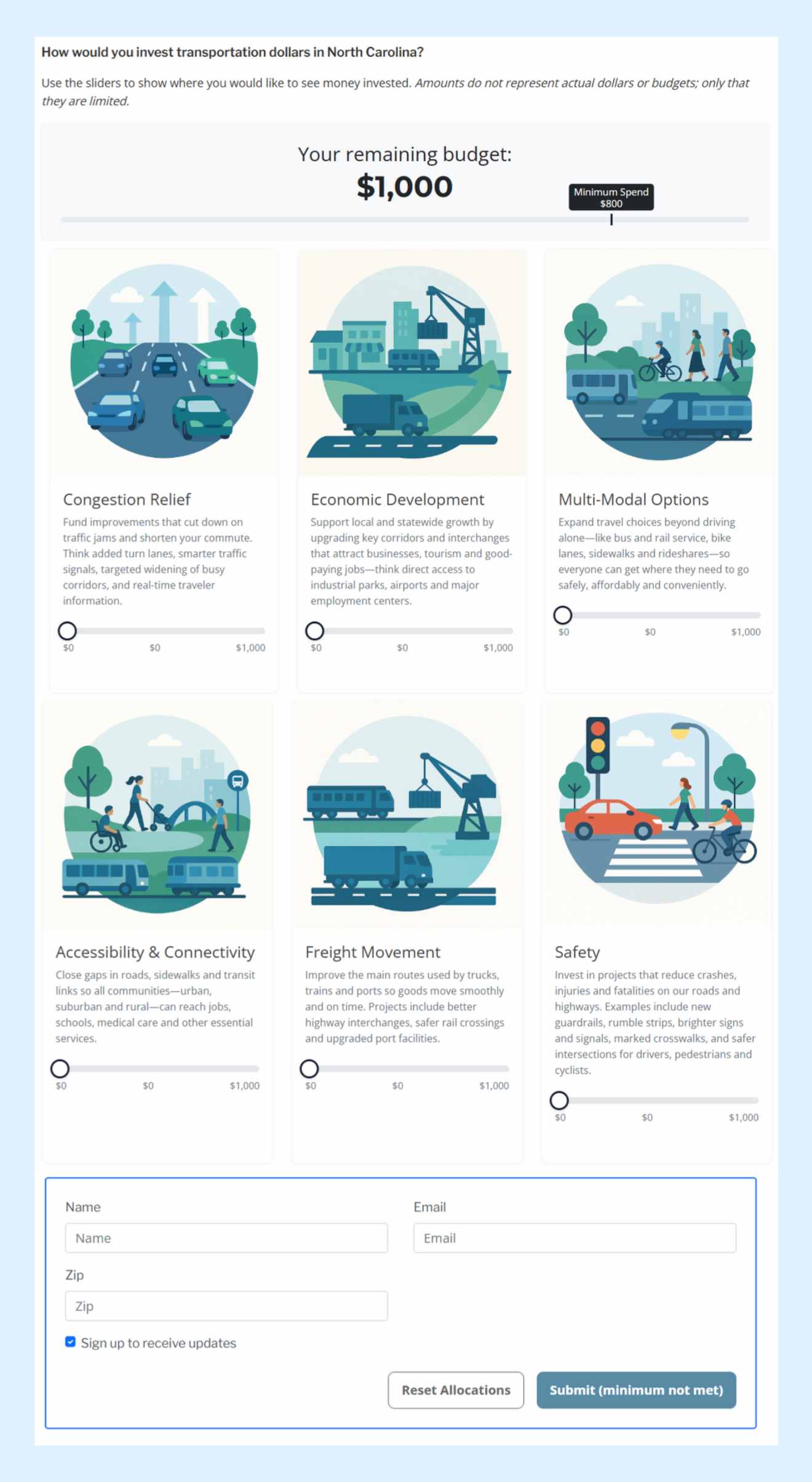
Help Leadership Make Informed, Defensible Decisions
“A budget officer is responsible for architecting a process that creates the best chance of producing savvy and wise decisions.” —GFOA
Whether you’re preparing recommendations for city council, department heads, or community partners, clear public input makes your case stronger.
With PublicInput, you can:
-
-
- Visualize themes from open-ended input
- Track sentiment over time
- Generate ready-to-share summaries for presentations
-
This builds trust internally and externally, reducing the perception that decisions are made behind closed doors.
Time It Right: Align Engagement With Budget Cycles
“The best intentions for better budgeting can crash into the realities of power politics.” –GFOA
Even the best engagement strategies can fail if they come too late. The key is to make community engagement part of the planning rhythm, not a last-minute add-on.
That might mean:
-
-
- Using lightweight engagement (like a one-question poll) early in the process
- Layering in deeper tools (like surveys or budget simulators) during planning
- Following up with summary dashboards when decisions are made
-
This approach builds credibility and helps internal champions push good ideas forward with less resistance.
Design a Budget Process Tailored to Your Community
“Be chefs, not cooks.” –GFOA
No two communities are exactly alike—and your budget engagement process shouldn’t be, either. PublicInput gives you the flexibility to:
-
-
- Customize budget input tools to reflect local priorities
- Scale engagement to fit your planning window and capacity
- Mix communication channels (web, SMS, print, in-person) to reach more people
- Generate ready-to-share summaries for presentations
-
In other words, you get the ingredients. How you cook the meal is up to you.
Final Thought: Budget Planning Is an Engagement Opportunity
Times when budgets are tight are the moments when engagement matters most. It’s not about slowing down the process, it’s about making it better and smarter, even when resources are limited.
When you bring people into the process early and often, you:
-
-
- Build trust
- Strengthen decisions
- Defend your recommendations with data
-
We’re here to help you build a more informed, inclusive, and defensible budget. Let’s talk about how PublicInput can support your next budget planning cycle.