How Asheville Scaled Community Engagement for Disaster Recovery

As a leader in equitable, transparent community engagement, the City of Asheville has been recognized with the Champion of Community Trust Award for its commitment to rebuilding trust with residents during disaster recovery. This case study explores how Asheville leveraged inclusive, accessible engagement strategies to center community voice, strengthen public confidence, and create lasting connections during a critical moment.
Community Profile
Asheville, North Carolina, is known for its scenic beauty, vibrant arts scene, and progressive values.
With over 90,000 residents, more than 22% identifying as people of color and nearly 1 in 7 living below the poverty line, Asheville faced unique equity challenges in recovery planning.
These dynamics became especially important after Hurricane Helene, when recovery demanded equitable solutions that reflected the needs of the whole community.
The Challenge of Aligning Recovery with Community Voice
In the wake of Hurricane Helene’s devastation, Asheville was tasked with rebuilding not just infrastructure, but trust. The city needed a recovery plan that could meet immediate needs and set a long-term path toward equity. Asheville had to show that residents—not just city staff—were shaping the decisions ahead.
People needed to know their voices mattered in how we rebuilt, especially in communities that have too often felt left out of decision-making. Recovery couldn’t just mean going back to how things were – it had to mean building something better and more resilient than what existed before.
-Dawa Hitch, City of Asheville Communications & Public Engagement Director
How PublicInput Was Used
Asheville used the PublicInput platform to power a wide-reaching, community-centered recovery engagement effort. The tools made it easier for city staff to connect with residents, collect feedback, and ensure transparency during a critical time. A variety of multi-channel tools helped make engagement inclusive and accessible, including:
- A Recovery Priorities Survey attracted nearly 7,000 participants, revealing what people needed most urgently and what they hoped for long-term.
- A centralized Recovery Engagement Hub and CDBG-DR webpage made it simple to find updates, documents, and ways to get involved.
- Targeted outreach tools helped ensure they heard from BIPOC residents, renters, and lower-income households—voices that often get overlooked.
- Weekly email campaigns kept residents in the loop—and people actually opened them (74.3% open rate).
- A standing voicemail line meant people without internet access could still share their thoughts.
- Through the Meetings Hub, residents could follow Council discussions and weigh in on budget decisions.
- The subscriber portal enabled ongoing, personalized communication, keeping community members connected as recovery unfolded.
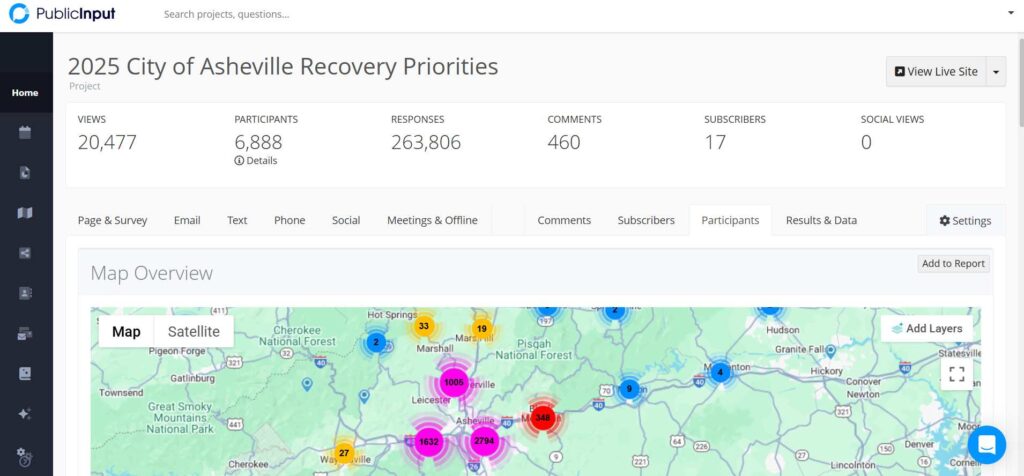
Asheville’s engagement team used PublicInput features to track who they were reaching and where improvements were needed, helping them demonstrate transparency and responsiveness in a politically sensitive moment.
Our engagement hub on PublicInput became one of our most critical tools after Helene. With so many moving parts and ever-changing deadlines, we needed a centralized way to keep residents informed and give them a real voice in the process. It allowed us to coordinate complex recovery work while staying accountable to the people most affected.
-Logan Smith, City of Asheville Media Engagement Coordinator
The Results: A Roadmap for Resilient, Equitable Recovery
Asheville’s effort reached unprecedented levels of participation for this type of engagement. Nearly 7,000 residents shared detailed input—a scale rarely seen in municipal recovery planning.
Here’s what they accomplished:
- Identified top community priorities : housing stability, economic recovery, food security, and climate resilience emerged as the biggest concerns.
- Documented who got hit the hardest: younger adults, renters, BIPOC residents, and small business owners voiced the greatest need.
- Created immediate policy impact: survey results helped influenced budget decisions and are expected to guide a future bond referendum.
- Rebuilt public trust: high engagement and open communication helped restore confidence during an incredibly challenging time.
Behind the scenes, the Communication and Public Engagement team spearheaded this work, helping departments weave engagement into their daily operations. It wasn’t just about one project—it was about building a new standard for how the city collaborates with its people.
Building a Long-Term Engagement Infrastructure
While the immediate recovery effort required rapid outreach, the systems Asheville built and adapted during Helene’s aftermath have helped shape how the City engages its community during the long-term recovery effort. The tools, workflows, and relationships forged under pressure have carried forward into other city priorities, from budget planning and infrastructure projects to housing policy and climate resilience.
By centralizing communication, tracking participation data, and making engagement accessible across platforms and devices, Asheville is now better equipped to involve residents in decisions that shape the city’s future long after the storm recovery winds down.
Put Community at the Center of Your Recovery Plans
Asheville’s story is a powerful example of what happens when public sector teams commit to inclusive, transparent engagement—even in the toughest moments. Whether you’re preparing for long-term planning, disaster recovery, or budget development, the tools and lessons from this case study offer a roadmap.