How Charleston County Transformed Community Engagement in Rezoning

As a leader in creative, resourceful community engagement, Charleston County has been recognized with the Resourceful Innovator Award for its efforts to maximize limited resources while driving meaningful participation in rezoning decisions. This case study explores how the County transformed complex, intimidating engagement into a clear, inclusive, and trust-building process that broadens participation and strengthens public confidence.
Community Profile
Charleston County, South Carolina, spans over 1,350 square miles and is home to approximately 415,000 residents. Its communities range from urban centers to suburban and rural areas, supported by diverse industries including tourism, manufacturing, and logistics. About 35% of residents identify as a minority.
Balancing growth while ensuring resident input in planning decisions is a constant challenge, making inclusive, transparent engagement critical for shaping neighborhoods, transportation, and land use.
THE CHALLENGE:
Fragmented and Labor-Intensive Engagement
Rezoning and land use decisions can be complex and intimidating for residents. Before implementing PublicInput, Charleston County’s Zoning & Planning Department relied on a fragmented system to collect feedback. Staff manually sorted hundreds of comments from emails, paper letters, petitions, and voicemails. Preparing materials for the nine-member council meant printing massive binders and constantly updating them as new feedback arrived.
Project Officer Niki Grimball described it as:
“A very daunting task to keep up with. Did I print it? Did I not print it? Did I convert it to a PDF? I don’t know.”
The high level of effort required to participate meant that feedback was often dominated by residents with strong objections or financial stakes, while busy supporters rarely contributed. This process led to staff burnout, incomplete perspectives, and anxious residents—highlighting the urgent need for a system that could turn scattered feedback into meaningful, representative dialogue.
THE SOLUTION:
A Unified, Accessible Engagement Platform
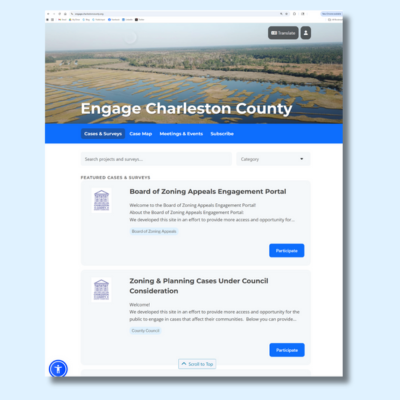
To address these challenges, Charleston County used PublicInput to centralize feedback and offer residents multiple ways to engage.
“The goal was to meet residents wherever they are in any part of their day.”
Here’s how they did it:
Centralized Feedback: All comments (online, voicemail, email, and text) automatically flowed into a single, organized project record, creating a definitive source of truth and reducing administrative stress.
Multi-Channel Participation: Residents can provide input on their terms using:
- Online Project Portals: Provides clear, templated pages with maps, milestones, and forms.
- Voicemail Comments: Automatically transcribed into the project record.
- Text Surveys: A quick feedback option residents could send on the go.
- Case-Specific Emails: Dedicated project email addresses captured feedback without cluttering staff inboxes.
- QR Codes on Mailers: Offers residents instant access to online project pages.
- Streamlined Administration: Pre-built templates allowed staff to set up multi-channel projects—including unique phone numbers, text codes, and email addresses—in just five minutes. Automated transcription and a self-service contact portal eliminated repetitive manual tasks, freeing staff to focus on analysis and strategic outreach.
“Now folks have all the control over what list that they want to be subscribed to or not… they can join and drop off as often as they want to and that’s all built into the page…”
THE RESULTS:
Clear, Inclusive, and Trust-Building Engagement
With PublicInput, Charleston County replaced fragmented, time-consuming processes with a streamlined system that delivered measurable improvements for both staff and residents. Here are a few key benefits they experienced:
Saved Time and Increased Staff Efficiency: Live, centralized information replaced static paper binders, freeing staff from repetitive manual tasks and allowing more focus on strategic outreach and engagement.
Expanded Participant Representation: Positive feedback rose from 1–2% to 16%, and previously unheard voices contributed through accessible channels such as voicemails, text surveys, and online portals.
Delivered Actionable, Data-Driven Insights: Real-time geospatial mapping and demographic filtering gave decision-makers a clear view of who was participating, where they lived, and what they were saying, turning scattered feedback into meaningful intelligence.
Strengthened Community Trust: Closing the feedback loop with participants and maintaining a permanent project archive ensured transparency, accountability, and lasting confidence in the process.
“You have everything in one place. Residents can participate in ways that fit their day, and staff can focus on engaging the community—not chasing paperwork.”
Transform Your Rezoning Community Engagement Efforts
Charleston County’s success demonstrates that modernizing engagement is about building trust, inclusivity, and better decision-making, not just improving efficiency. PublicInput can help agencies centralize feedback, broaden participation, and streamline workflows.
Here’s how to start your path to transformation:
- Book a Free Consultation – Define your engagement challenges and map a plan for success.
- See a Tailored Demo – Explore how the PublicInput can address your agency’s unique needs.
- Launch Your Plan – Implement a modern, accessible engagement strategy that empowers your community.